Asset Form Rule
Asset form rules allow you to configure fields (system and custom) as mandatory/optional, visible/hidden, or enabled/disabled; set/clear values; show/hide options; or run custom scripts based on specific conditions in the asset form. These rules are applicable during asset creation, editing, or both, helping to capture necessary user details.
To view the Asset Form Rules, navigate to Admin > Asset Management > Asset Form Rules.
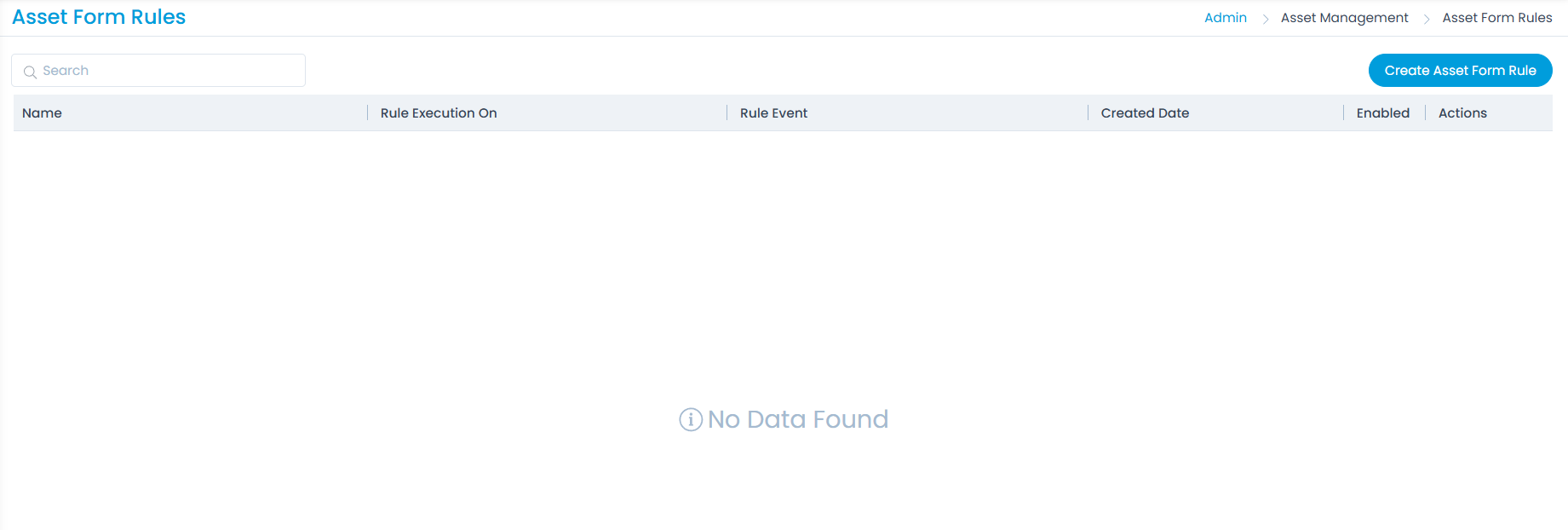
Here, you can search and create an asset form rule.
Create an Asset Form Rule
To create a form rule, follow these steps:
note
- A maximum of 10 actions can be added to the Asset Form Rule.
- Click the Create Asset Form Rule button in the top-right corner of the page. A popup window will appear.
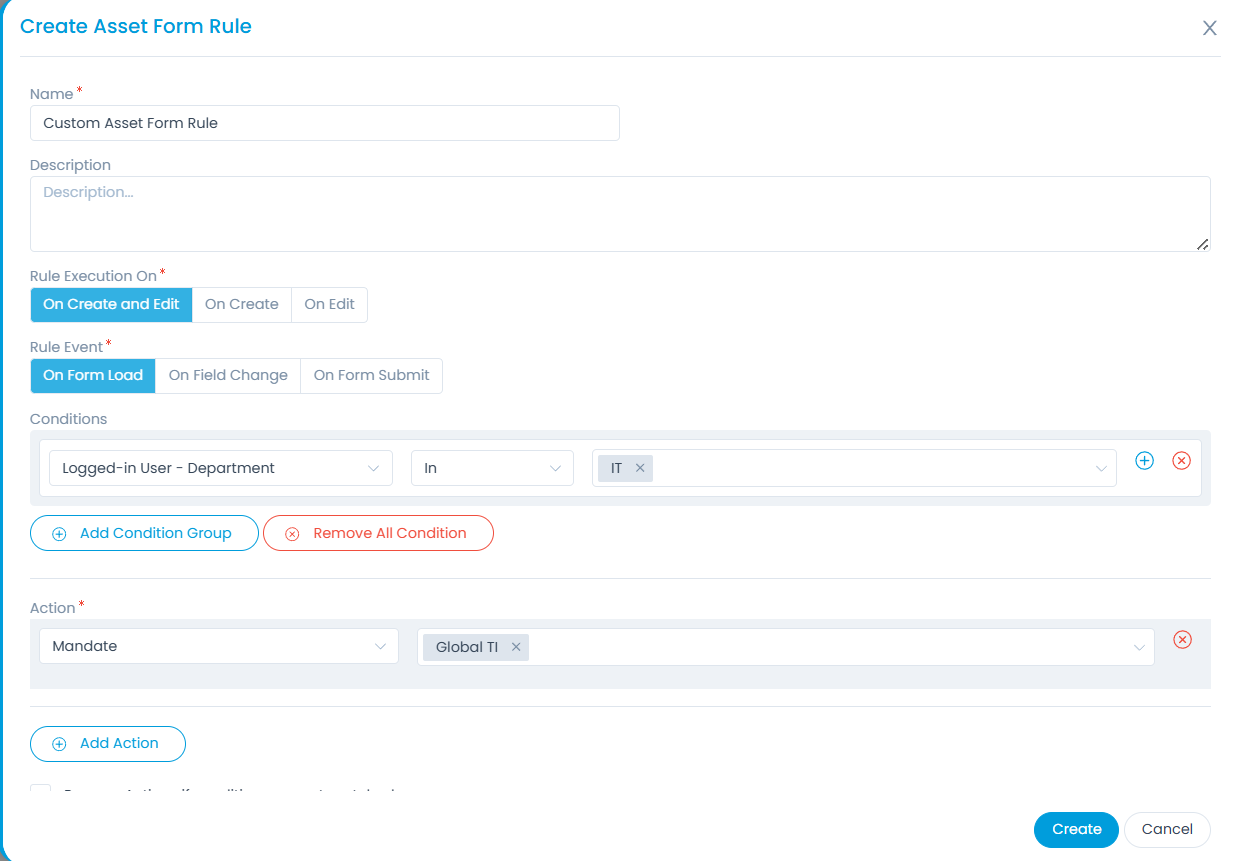
- Enter the following details:
- Name: Enter the name of the asset form rule.
- Description: Enter a short description of the asset form rule.
- Rule Execution On: Select when you want to execute the rule. The options are:
- On Create and Edit: Select if you want the form rule to execute during asset creation and editing.
- On Create: Select if you want the form rule to execute only during asset creation.
- On Edit: Select if you want the form rule to execute only during asset editing.
- Rule Event: Select the event on which the rule should be executed. The options are:
- On Form Load: Select to apply the rule when the form loads.
- On Field Change: Select to apply the rule when the value of a field changes.
- On Form Submit: Select to apply the rule when the form is submitted.
- Conditions: Define the conditions that will be evaluated in the asset form to apply the rule. Conditions are grouped into Logged-in Users fields and Asset fields. You can define multiple conditions, which operate with an AND logic, meaning the rule is applicable only when all conditions are true.
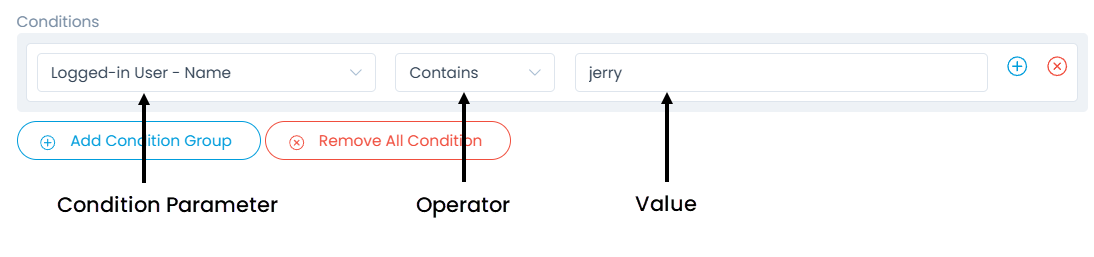
- Condition Parameter: Select a condition parameter from the dropdown list.
- Operator: Select the operator (e.g., 'In' or 'Not In') from the dropdown list.
- Value: Select the value for the condition. You can select multiple values; the first value will be displayed in full, followed by a count of additional selected values.
You can also click the Add Condition Group button to add more conditions or Remove All Conditions to remove all conditions from the Asset Form Rule.
- Action: Select the action and its value(s) for the selected conditions from the given list. In the figure below, the priority field will become mandatory if the Support Technician Group is selected in the asset form. You can add more actions using the Add Action button. The actions that can be configured are:
- Show: Makes the required field visible on the Asset Form when the conditions of the form rule match.
- Hide: Hides the required field on the Asset Form when the conditions of the form rule match. Once a field is hidden, you can also apply the clear value and set value actions on it.
- Mandate: Makes the required field mandatory on the Asset Form when the conditions of the form rule match.
- Non-Mandate: Makes the required field optional on the Asset Form when the conditions of the form rule match.
- Enable: Enables the required field on the Asset Form when the conditions of the form rule match.
- Disable: Disables the required field on the Asset Form when the conditions of the form rule match.
- Set Value: Sets the value of the required field on the Asset Form when the conditions of the form rule match.
- Clear Value: Clears the value of the required field on the Asset Form when the conditions of the form rule match.
- Show Options: Shows the options of the required dropdown field on the Asset Form when the conditions of the form rule match.
- Hide Options: Hides the options of the required dropdown field on the Asset Form when the conditions of the form rule match.
- Run Custom Script: Runs the custom script to populate the required field with data.

- Reverse Actions if conditions are not matched: Enable this option to reverse the actions when the conditions in the asset form do not match. This is available only if conditions are added.
- Once completed, click Create. The rule will then appear on the list page, as shown below.
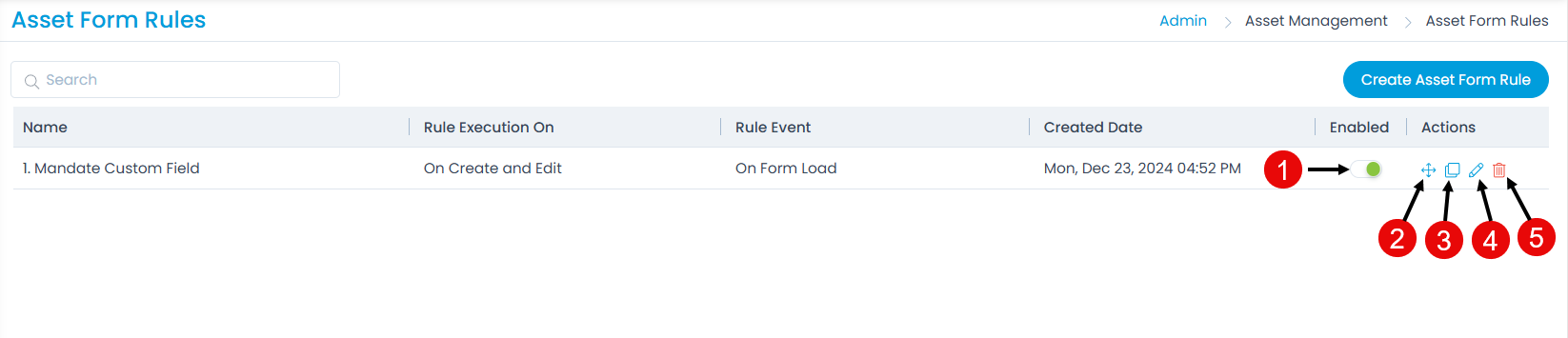
Once the rule is created, you can do the following operations:
- Enabled: Enable or disable an asset form rule. It is enabled by default. If disabled, the rule will not be applied to the asset form.
- Re-order: Reorder the rule using drag and drop.
- Duplicate: Create a duplicate rule based on an existing one.
- Edit: Edit the rule to make changes.
- Delete: Delete unwanted rules. A confirmation message appears. Click Yes to continue or Cancel to stop the process.