Instrumenting Angular Applications for RUM Using Apache
Overview
This guide explains how to instrument an Angular application for Real User Monitoring (RUM) and route browser RUM data through Apache to the Motadata backend.
In this setup:
- The Angular application captures real user experience data using the Motadata RUM SDK.
- Apache forwards the RUM payloads to Motadata using a reverse proxy route (
/api/v2/rum).
Prerequisites
Ensure the following requirements are met before proceeding:
- Motadata ObserveOps (formerly known as AIOps) has a valid RUM license.
- The Apache server must be able to communicate with the Motadata backend over TCP port 9477, with connectivity available in both directions.
- Access to the Angular project directory is available.
- Permission is granted to modify the Apache SSL configuration file (VirtualHost configuration).
Step 1: Create a RUM Application in Motadata ObserveOps
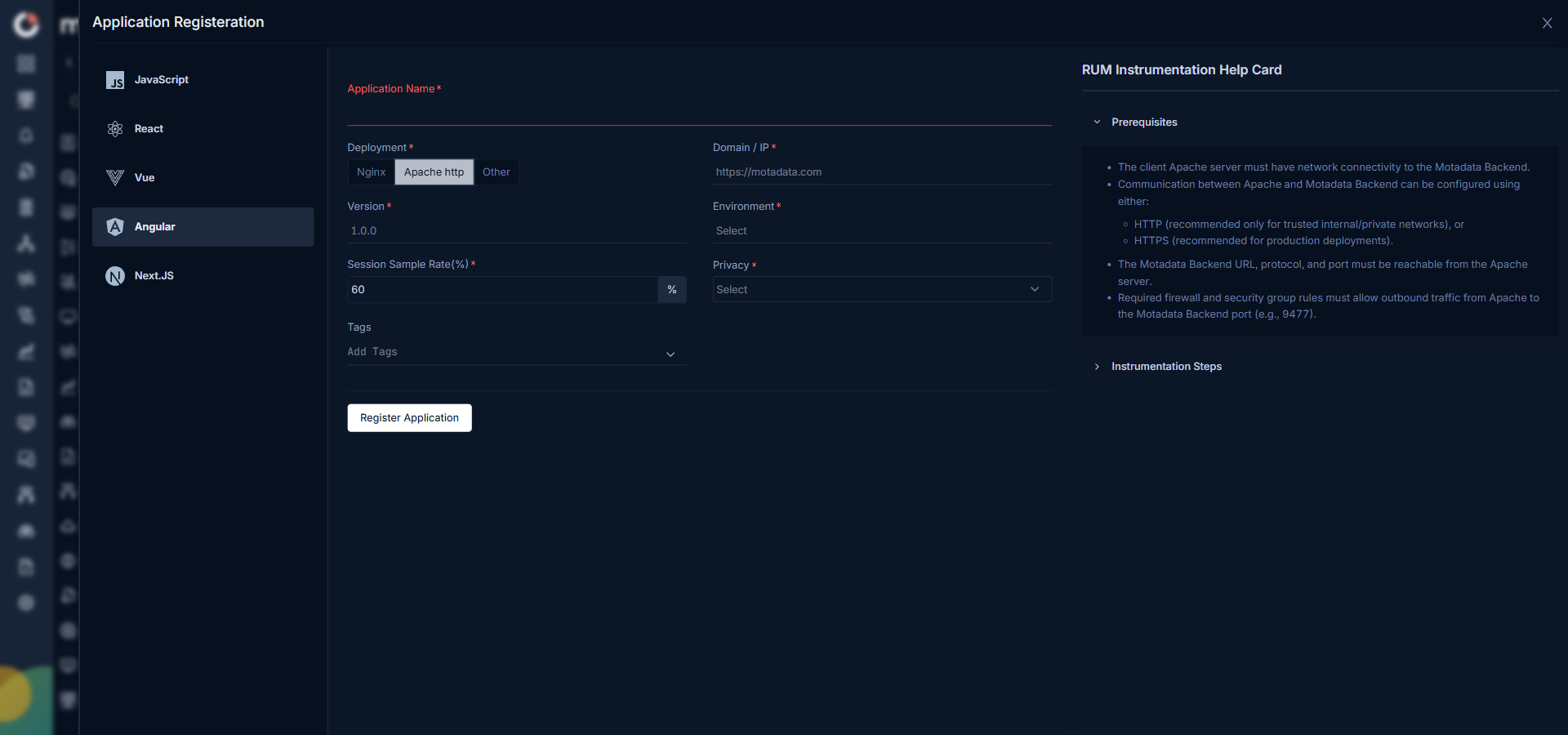
- Go to Settings > Real User Monitoring > Application Registration and click the Create Application button.
- Provide all the required information, selecting Apache as the deployment type.
- Click the Register Application button. This will display the RUM initialization snippet on the screen.
- Copy the generated RUM initialization code snippet.
From the snippet, note the following values:
applicationIdclientToken- RUM endpoint path (
/api/v2/rum)
Step 2: Configure Apache Reverse Proxy for RUM
Step 2.1: Open Apache SSL VirtualHost Config
Edit your Apache SSL site configuration file.
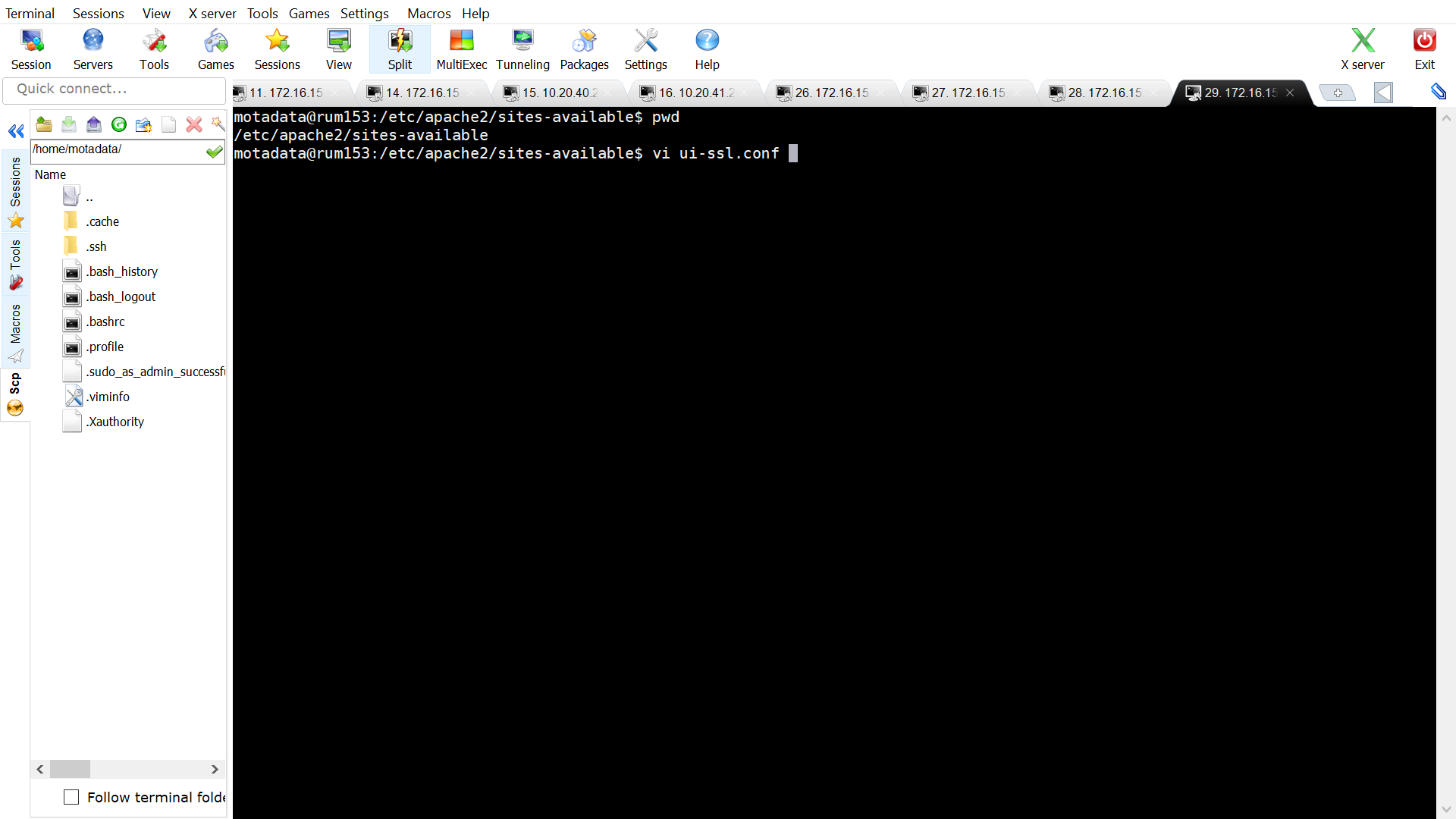
Example:
sudo vi </etc/apache2/sites-available/ui-ssl.conf>(apache.config file path)
Use your actual Apache configuration file path if different.
Step 2.2: Add Reverse Proxy Rules for RUM
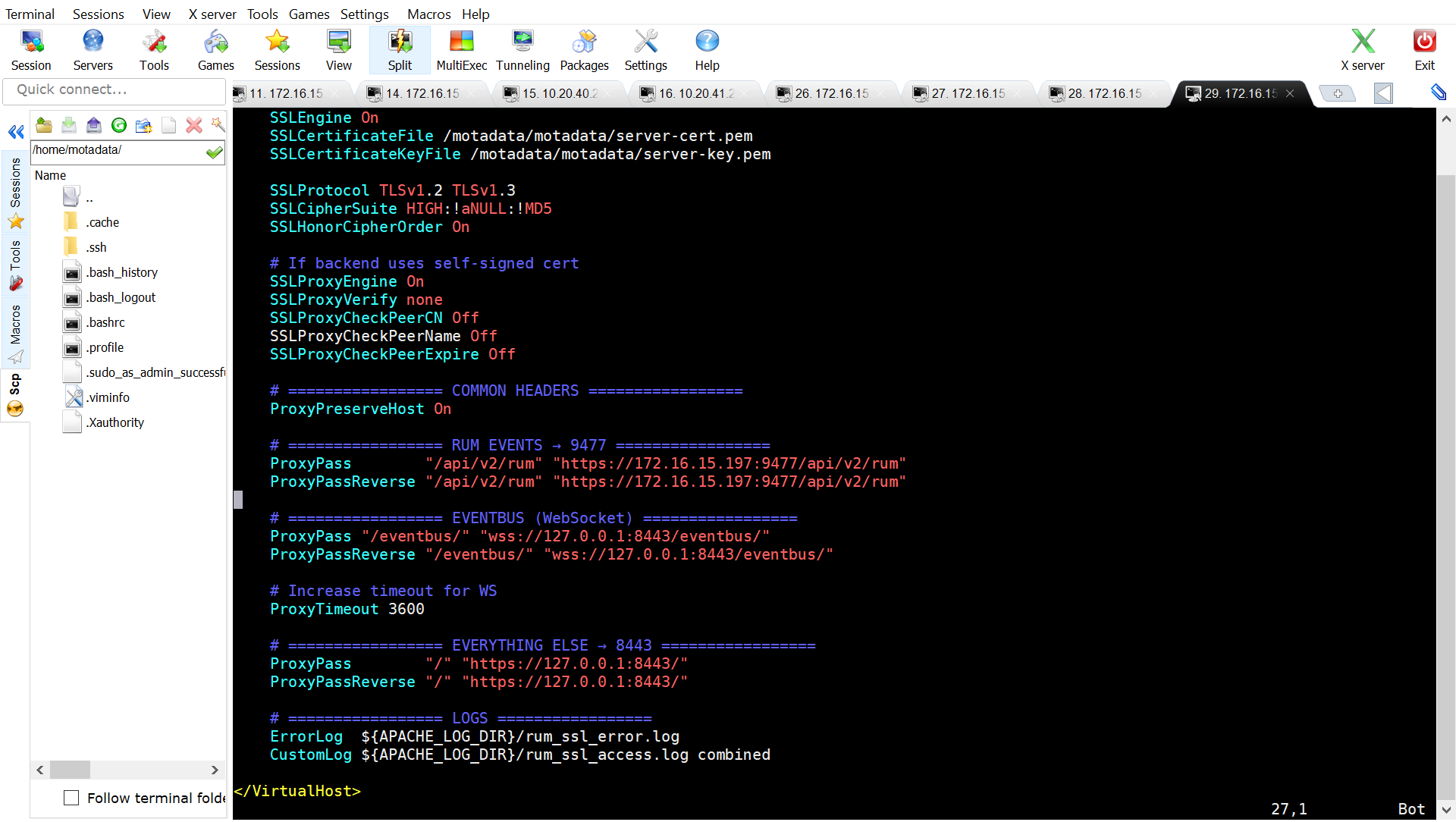
Add the following configuration under the SSL VirtualHost block:
SSLProxyEngine On
SSLProxyVerify none
SSLProxyCheckPeerCN Off
SSLProxyCheckPeerName Off
SSLProxyCheckPeerExpire Off

ProxyPreserveHost On

ProxyPass "/api/v2/rum" "https://<MOTADATA_BACKEND_IP>:9477/api/v2/rum"
ProxyPassReverse "/api/v2/rum" "https://<MOTADATA_BACKEND_IP>:9477/api/v2/rum"
After configuring this, Apache forwards the RUM payloads received from the browser to the Motadata backend.
Step 3: Reload Apache
Validate and reload the Apache configuration:
sudo apachectl configtest
sudo systemctl reload apache2
Step 4: Install the RUM SDK in Angular
An active internet connection is required during the initial installation of the SDK package. Open terminal and navigate to your application project directory and run the following command:
npm install @motadata365/browser-rum
Internet access will also be required whenever an SDK is updated and needs to be applied.
Step 5: Initialize RUM in main.js
Open your Angular application’s main.js file and add the RUM initialization code snippet after completion of import library commands.
While pasting the command snippet, ensure that all brackets remain intact and are not modified or removed.
Example configuration (replace with your generated values):
import { motadataRum } from '@motadata365/browser-rum';

motadataRum.init({
  applicationId: '7',
  clientToken: 'pubXXXXXXXXXXXXXXX',
  site: 'https://test',
  service: 'rum_Angular_apache@8.1.2:PROD',
  env: 'PROD',
  version: '8.1.2',
  sessionSampleRate: 60,
  trackUserInteractions: true,
  trackResources: true,
  trackLongTasks: true,
  defaultPrivacyLevel: 'allow',
  trackBfcacheViews: true
});
After configuration, the Angular application captures the real user experience data and sends the data to the Motadata backend for monitoring.
Step 6: Build and Deploy the Angular Application
Build the Angular application for production:
ng build --configuration production
Restart Apache if required:
sudo systemctl restart apache2
Once the above configuration is completed, the onboarded application may take a few minutes to reflect in the Rum Explorer, displaying live user insights and performance diagnostics.