Motadata ServiceOps Release Version 8.7.5
Release Date: July 22, 2026
What's New?
Vulnerability and Remediation Management
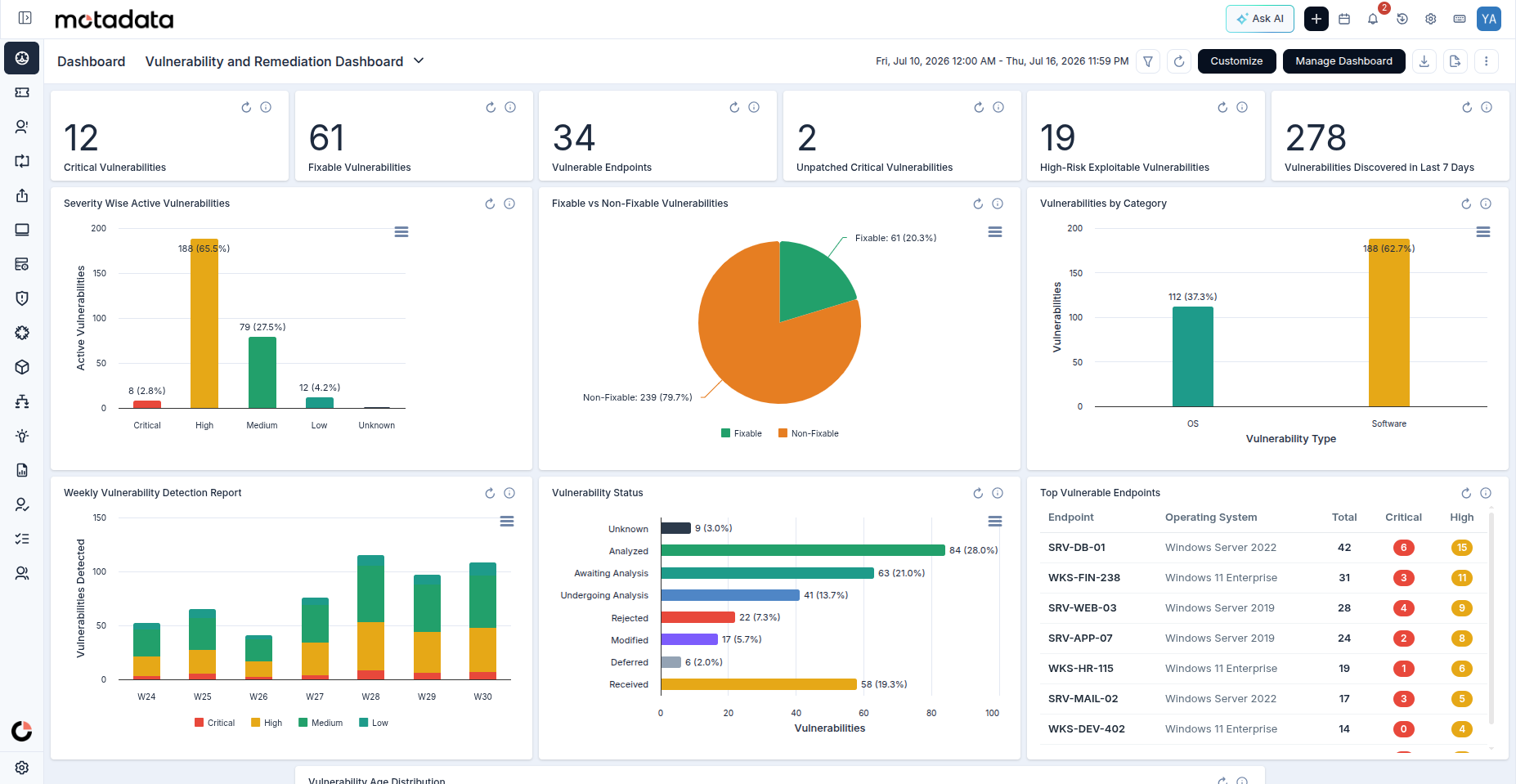
New Vulnerability Management Module
ServiceOps introduces a new Vulnerability Management module that gives IT and security teams a single place to detect, assess, and remediate vulnerabilities across managed endpoints. Teams relying on standalone scanners and spreadsheets face gaps between discovery and fix that leave endpoints exposed. Use it during routine security assessments, compliance cycles, and incident response across all agent-managed endpoints. The module covers vulnerability scanning, CVE detection, severity classification, remediation tracking, and direct integration with Patch Management for patch-based fixes.
OS Deployment
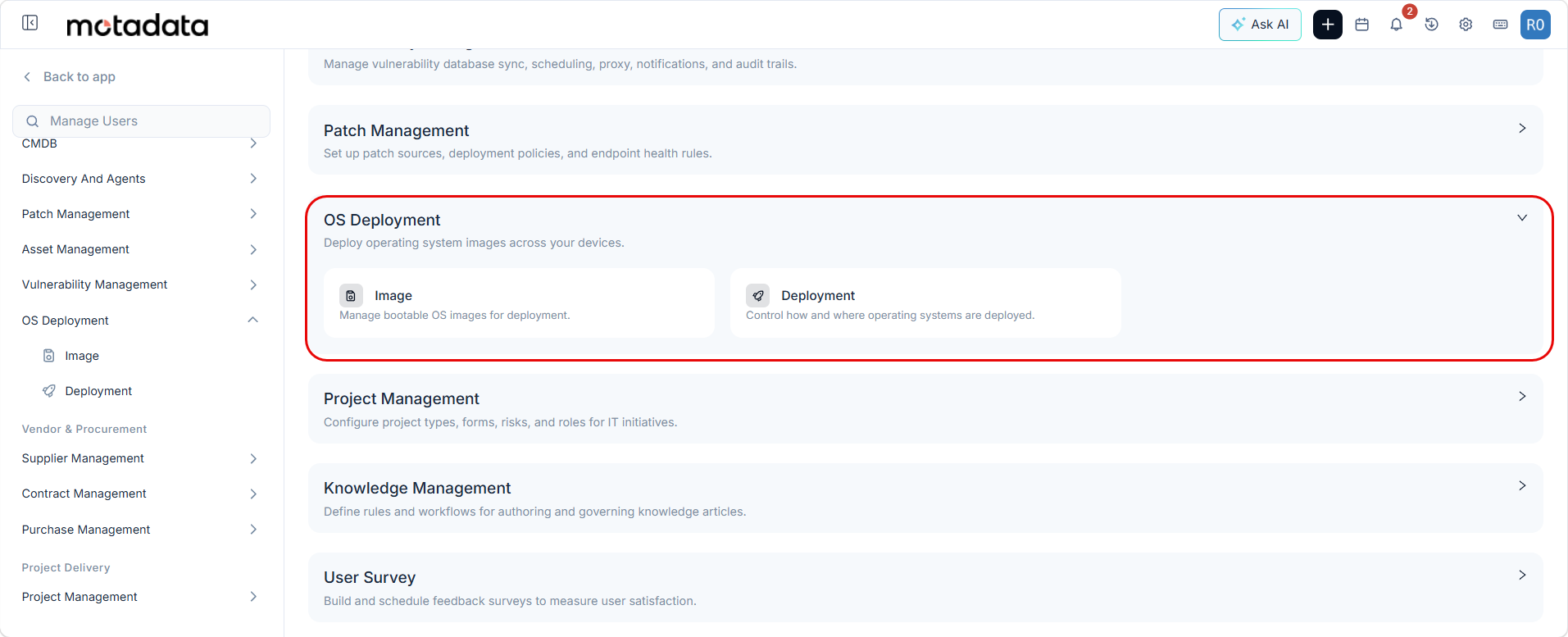
Comprehensive OS Deployment Management
ServiceOps introduces a new OS Deployment Management module that lets IT teams create, manage, and deploy golden images to endpoint devices directly from the platform. Managing OS deployments without a dedicated tool means relying on manual processes or standalone imaging tools, making it difficult to standardize configurations and track outcomes across a fleet. Use it during device provisioning, re-imaging, and large-scale fleet rollouts, where a single golden image can be deployed to multiple endpoints in one operation. The module covers golden image creation, deployment policies, target computer selection, and deployment tracking. Role-based permissions govern all OS deployment actions.
Digital Signature
DocuSign Integration for Digital Signatures
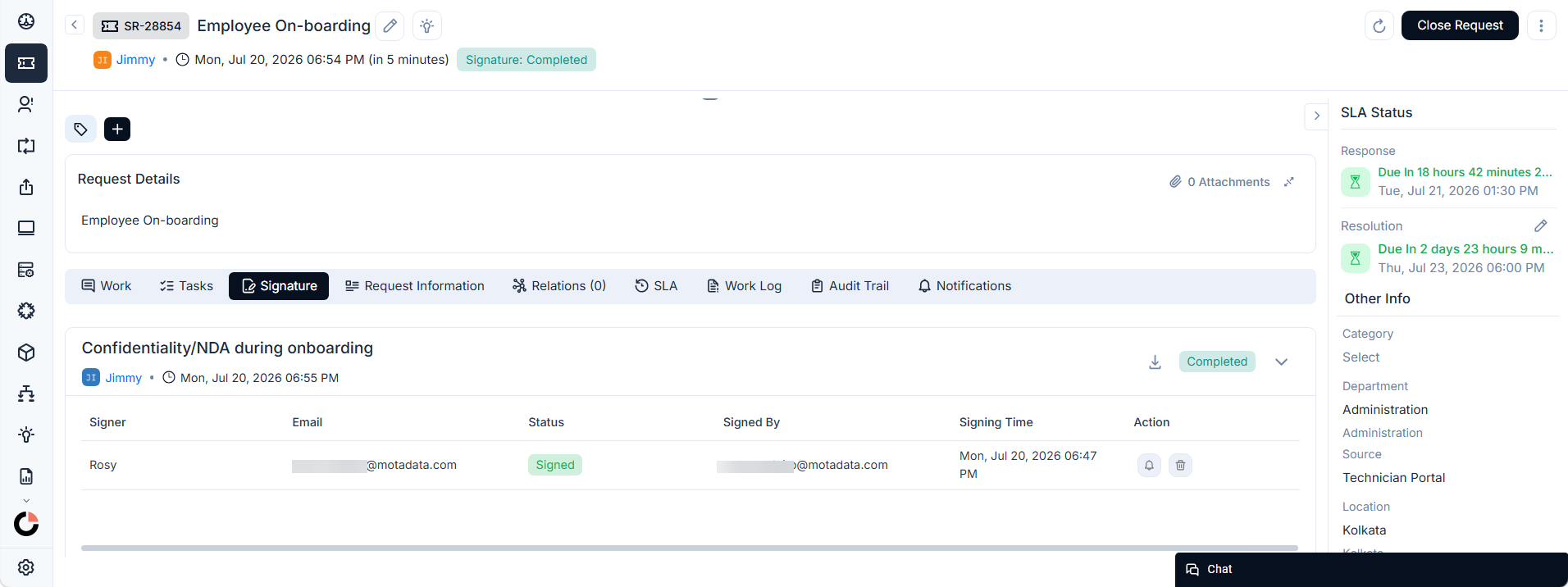
ServiceOps now supports Digital Signatures through native DocuSign integration, enabling organizations to securely send, sign, and track business documents. Documents can be sent for signature directly from Service Requests, Changes, Purchase Orders, and Contracts, providing complete visibility into the signing process with a centralized audit trail and real-time signature status. Unlike a standard approval, Digital Signatures are designed for business processes that require a legally binding, authenticated, and verifiable signature, such as employee onboarding forms, policy acknowledgements, purchase approvals, and contracts.
A Digital Signature add-on license for at least one of the supported modules (Service Request, Change, Purchase, or Contract) is required.
Key Enhancements:
- Signer Status Tracking: Real-time status via DocuSign Connect webhooks. Remind, Delete, and Ignore actions are available during the signing process.
- Document Download: Partial downloads are available at any time. Once complete, ServiceOps automatically stores the signed PDF merged with the DocuSign Certificate of Completion.
- Support Portal: Requesters can view signature status on the Support Portal Request detail pages when the Signature tab is enabled under Admin > Support Channels > Support Portal.
- Summary Reports: Summary Reports now include a Digital Signature Details column with Signer, Signer Status, and Signer Signed Time sub-columns.
- Remove Signature Details on Ticket Conversion: A Remove Signature Details option is now available when converting a ticket between types (Incident to Service Request, Service Request to Service Request, and Service Request to Incident). When selected, all digital signature details from the source ticket are removed before conversion, ensuring only signature templates applicable to the target ticket type are retained.
Patch Management
Patch Deployment Reporting and Dashboard
Patch Managers can now generate Patch Deployment Reports to monitor the progress and status of each deployment on a scheduled or on-demand basis, and view results directly in a dedicated out-of-the-box Patch Deployment dashboard. The report provides visibility into deployment outcomes across endpoints, supporting both targeted reviews and broad fleet-level assessments. The dashboard comes pre-configured with the following widgets and KPIs, giving Patch Managers a complete deployment monitoring view immediately after setup.
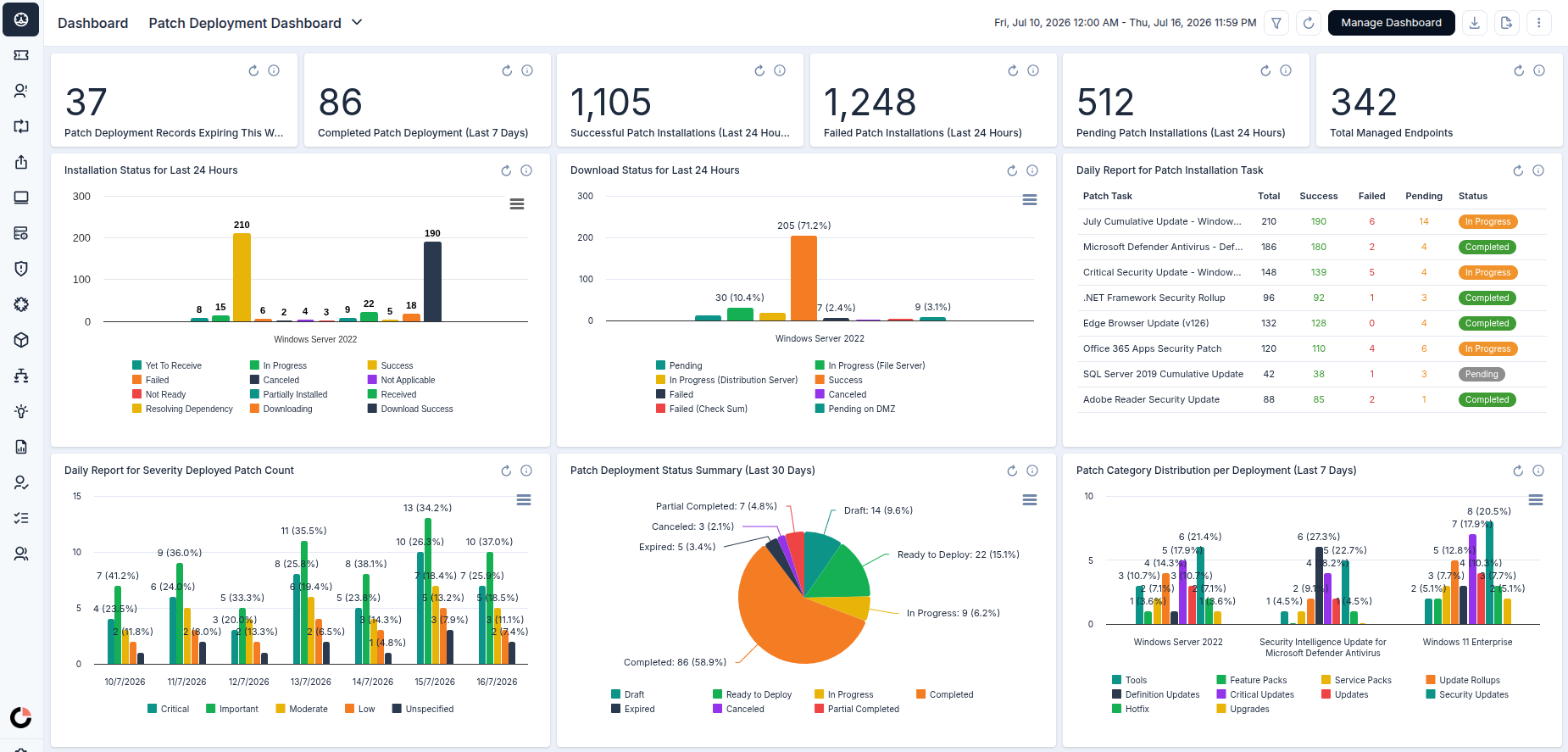
Widgets:
| Widget Name | Chart Type | Purpose |
|---|---|---|
| Installation Status for Last 24 Hours | Column | Installation status counts per deployment updated in the last 24 hours |
| Download Status for Last 24 Hours | Column | Download status counts per deployment updated in the last 24 hours |
| Daily Report for Patch Installation Task | Column | Daily count of patch installation tasks with In Progress or Ready to Deploy status |
| Daily Report for Severity Deployed Patch Count | Column | Daily count of patches by severity for active deployments |
| Patch Deployment Status Summary (Last 30 Days) | Pie | Distribution of patch deployment statuses created in the last 30 days |
| Patch Category Distribution per Deployment (Last 7 Days) | Column | Patch categories per deployment ID created in the last 7 days |
KPIs
| KPI Name | What It Shows |
|---|---|
| Patch Deployment Records Expiring This Week | Deployment records with an expiry date within the next 7 days |
| Completed Patch Deployment Records (Last 7 Days) | Deployment records with Completed or Partially Completed status |
| Successful Patch Installations (Last 24 Hours) | Installations with status Success updated in the last 24 hours across all active deployments |
| Failed Patch Installations (Last 24 Hours) | Installations with status Failed updated in the last 24 hours across all active deployments |
| Pending Patch Installations (Last 24 Hours) | Installations with status Yet to Receive or In Progress updated in the last 24 hours |
| Critical Failed Patch Installations | Critical-severity installations that have failed across all active deployments |
Patch Management Support for Third-Party Applications
Users can now perform patch management for the following third-party applications:
| Serial Number | Application |
|---|---|
| 1 | NCPA (Nagios Cross-Platform Agent) |
| 2 | AnyBurn |
| 3 | Delinea Connection Manager |
| 4 | DisplayCAL |
| 5 | Doxygen |
| 6 | Bandicut |
| 7 | Bandicam |
| 8 | Banyan |
| 9 | Bitfocus Companion |
| 10 | CatDV Pro |
| 11 | CatDV Server |
| 12 | CatDV Worker |
| 13 | Communicator (.EXE only) |
| 14 | Crypt-o (MSI only) |
| 15 | Go Programming Language |
| 16 | Hamachi |
| 17 | HomeBank |
| 18 | Icinga 2 |
| 19 | IdeaMaker |
| 20 | Ocenaudio (.EXE only) |
Ubuntu 26.04 LTS Support for Patch Management and Discovery
ServiceOps now supports Ubuntu 26.04 LTS for both OS discovery and patch management. Endpoints running Ubuntu 26.04 LTS are discovered automatically and enrolled for patch scanning and deployment through the standard agent-based workflow.
Patch Management Support for macOS 26, SUSE 15.6, 15.7, and 16 server only
ServiceOps now supports patch management for macOS 26, SUSE 15.6, 15.7, and 16 server only.
Asset Discovery and Patch Management Support for Debian 13
ServiceOps now supports Debian 13 servers for both asset discovery and patch management. The agent is compatible with Debian 13, enabling hardware and software inventory collection and patch scanning and deployment through the standard agent-based workflow.
Asset Management
Asset Discovery Support for SUSE Linux 15
ServiceOps now supports Asset Discovery for SUSE Linux 15.3 and earlier endpoints.
Fedora OS 44 Support for Discovery
ServiceOps now discovers endpoints running Fedora OS 44. Hardware and software inventory is collected automatically through the standard agent-based discovery workflow.
Workflow and Automation
Key-Value Pair Support in Create Task Node
The Create Task node in Workflow Automation now supports key-value pair inputs. This provides the same structured data entry available in module-specific Add Task configurations, removing the reference limitations of the previous form design.
Serial Number, IP Address, and Host Name Fields in Hardware Asset Workflow Actions
The Create Asset and Update Asset workflow actions now include Serial Number, IP Address, and Host Name fields when the asset type is set to Hardware Asset. These fields were previously unavailable in workflow configuration, requiring manual updates outside the automation flow.
Admin and Configuration
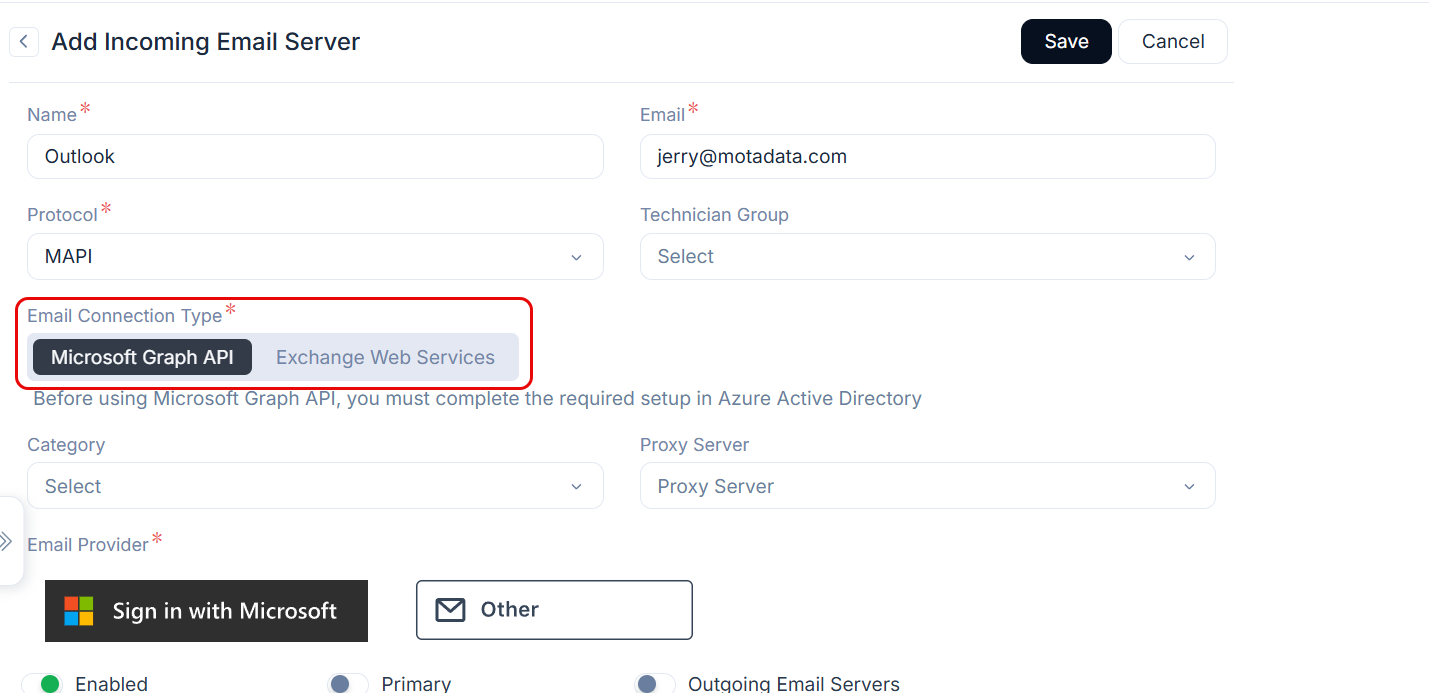
Microsoft Graph API Support in Email-to-Ticket
Incoming email servers can now authenticate using the Microsoft Graph API, providing a modern, OAuth-based alternative to legacy SMTP and EWS connections for email-to-ticket processing.
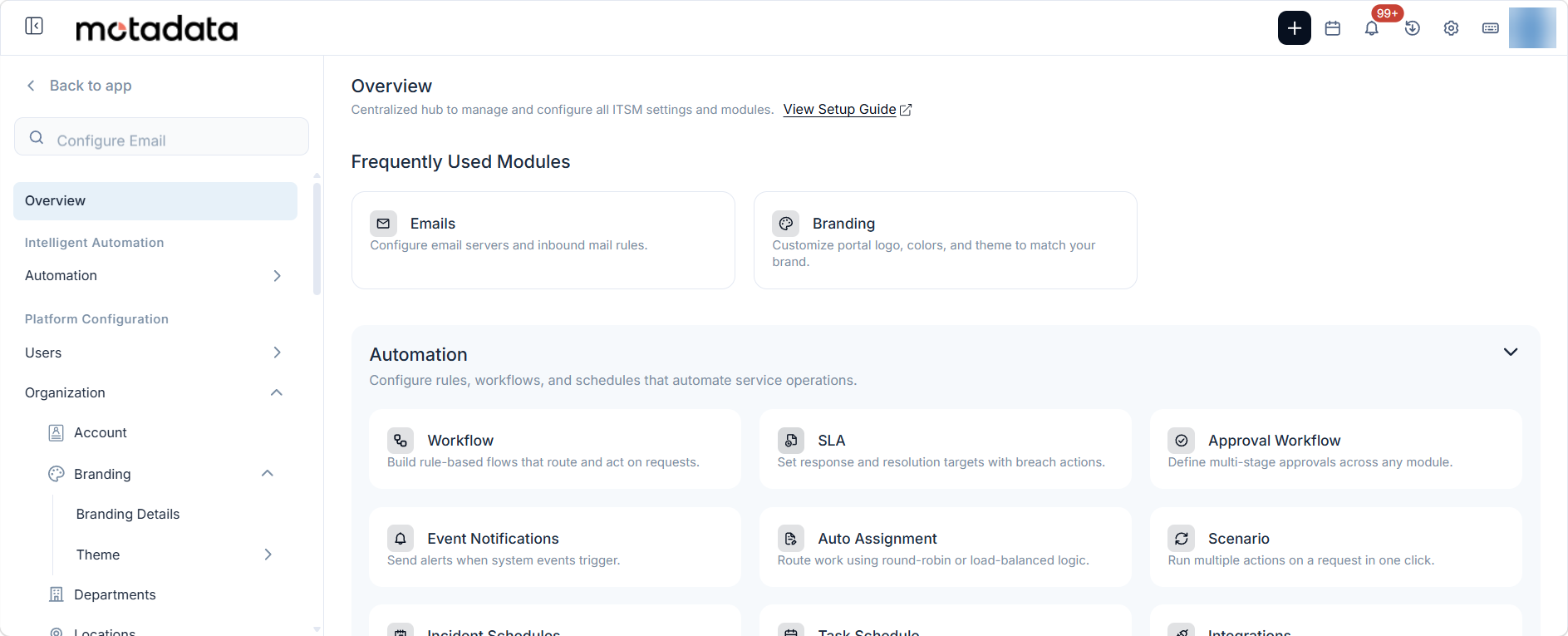
Admin UI Navigation and Layout Redesign
The ServiceOps Admin panel has been redesigned with an updated visual language, restructured navigation, frequently used modules, and a more intuitive information architecture.