Teams App Config
Microsoft Teams or Teams is an application to communicate with your team members. Using Teams for incident creation and management will become easier if you add the ServiceOps Virtual Agent as an app within Teams. Once added, you can generate or review requests from Teams without signing-in to the Support Portal or accessing the virtual chat agent from the portal.
You can integrate a custom-built Teams app that connects your ServiceOps Portal, enabling the Virtual Agent to send responses to the requester over the Teams application.
Applicable Version
This functionality is applicable from version 7.7 and above.
Prerequisites
- ServiceOps hosted on a live URL.
- SSL certificate enabled.
- The Base URL in ServiceOps should be the same as the portal URL.
- Requester created in the ServiceOps portal.
- Teams account created with the same requester email ID as created in the above point.
- The Developer Portal in Teams should be accessible for creating an app.
Creating and Configuring Teams Virtual Agent
It covers two approaches:
- Using the Classic Method via ServiceOps configuration.
- Using the New Developer Portal for Teams, offering more customization and control.
To create and configure the Teams Virtual Agent, follow the below steps. Also, you can watch the video Teams App Config to learn more about this feature.
Integration using the Classic Method
This approach uses the ServiceOps built-in configuration interface. The steps are:
Step 1: Create or Open a Teams account with admin permissions.
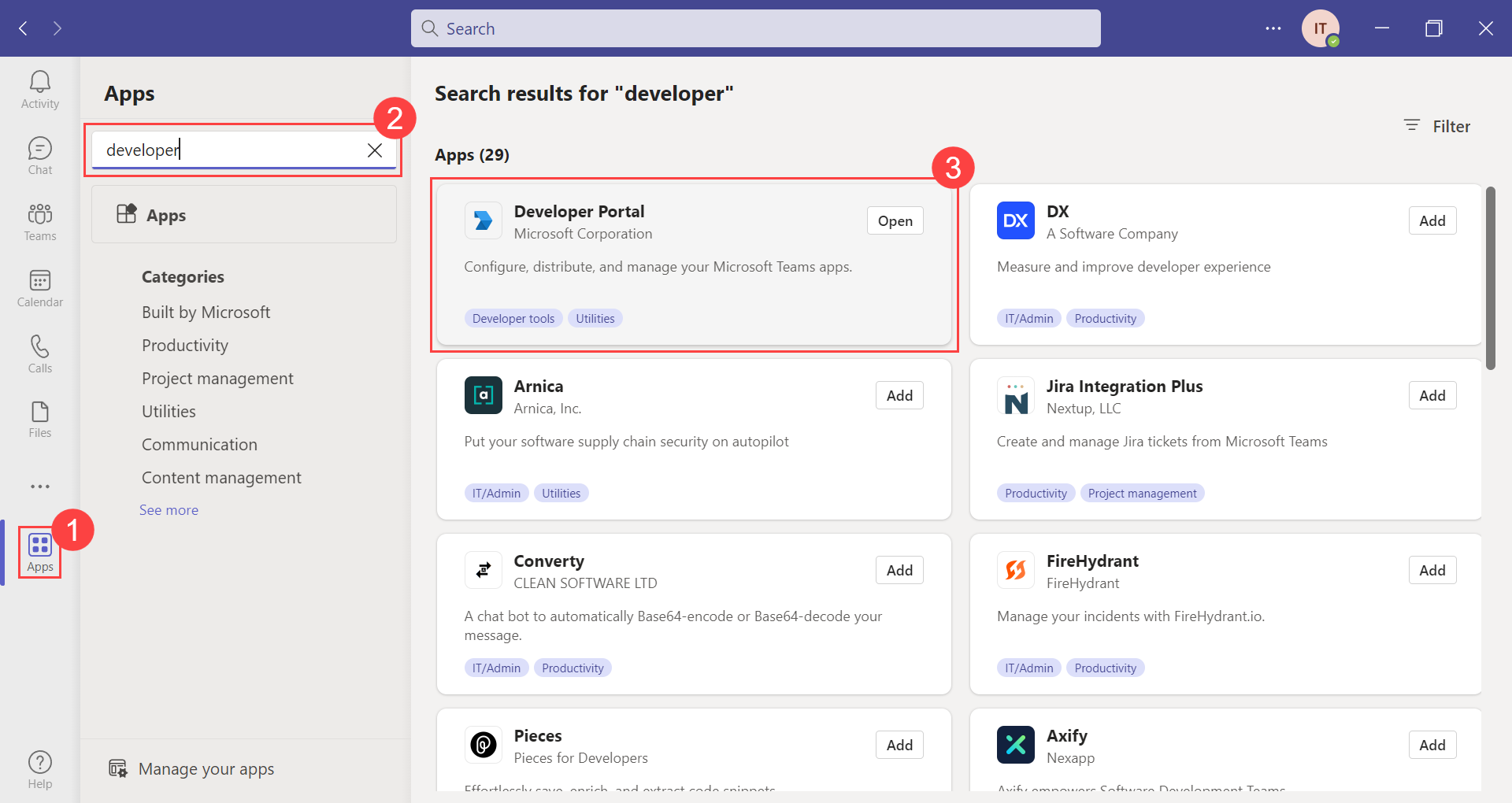
Step 2: Open the application and navigate to Apps > Developer Portal.
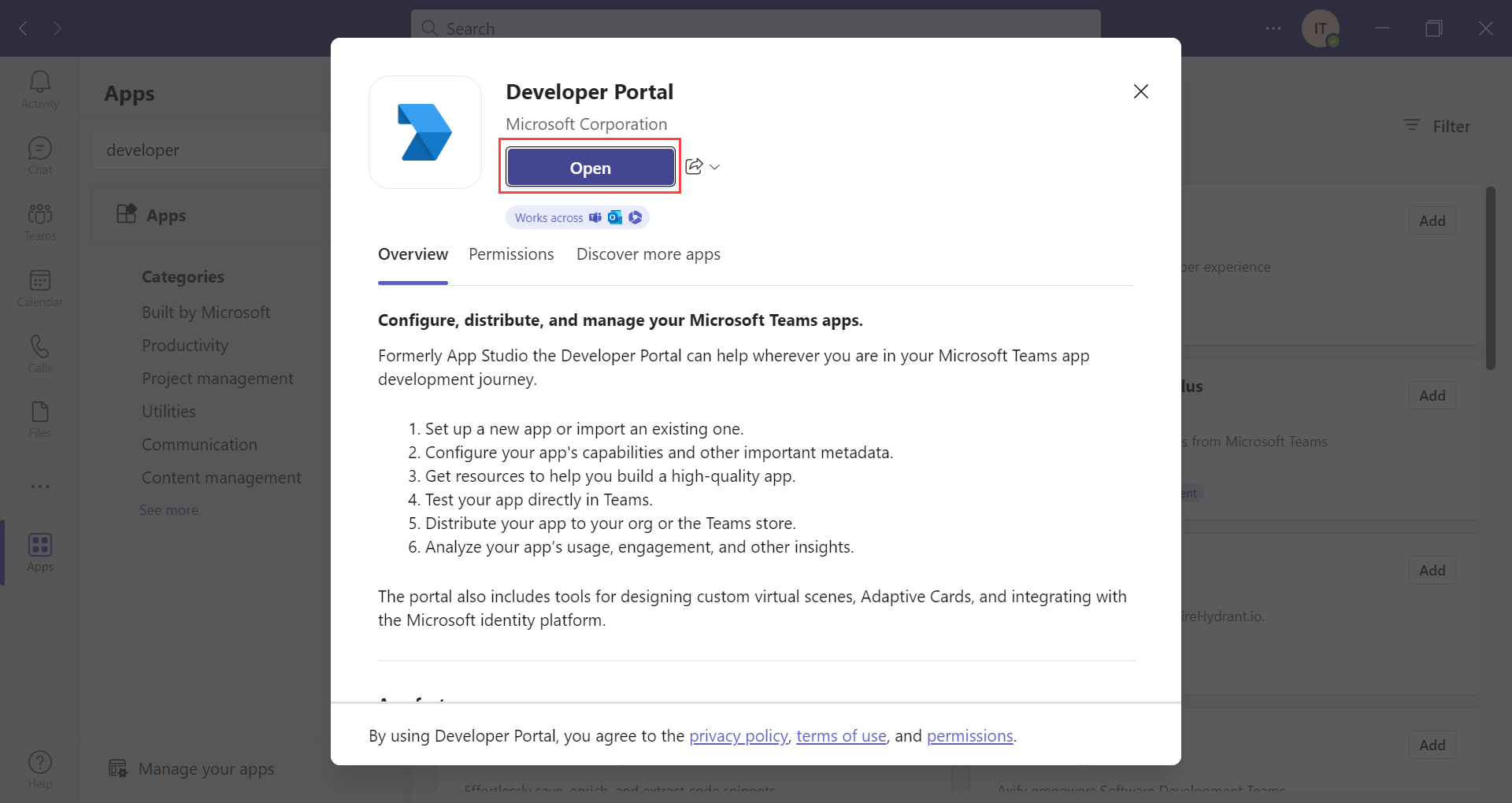
Step 3: Click Open.
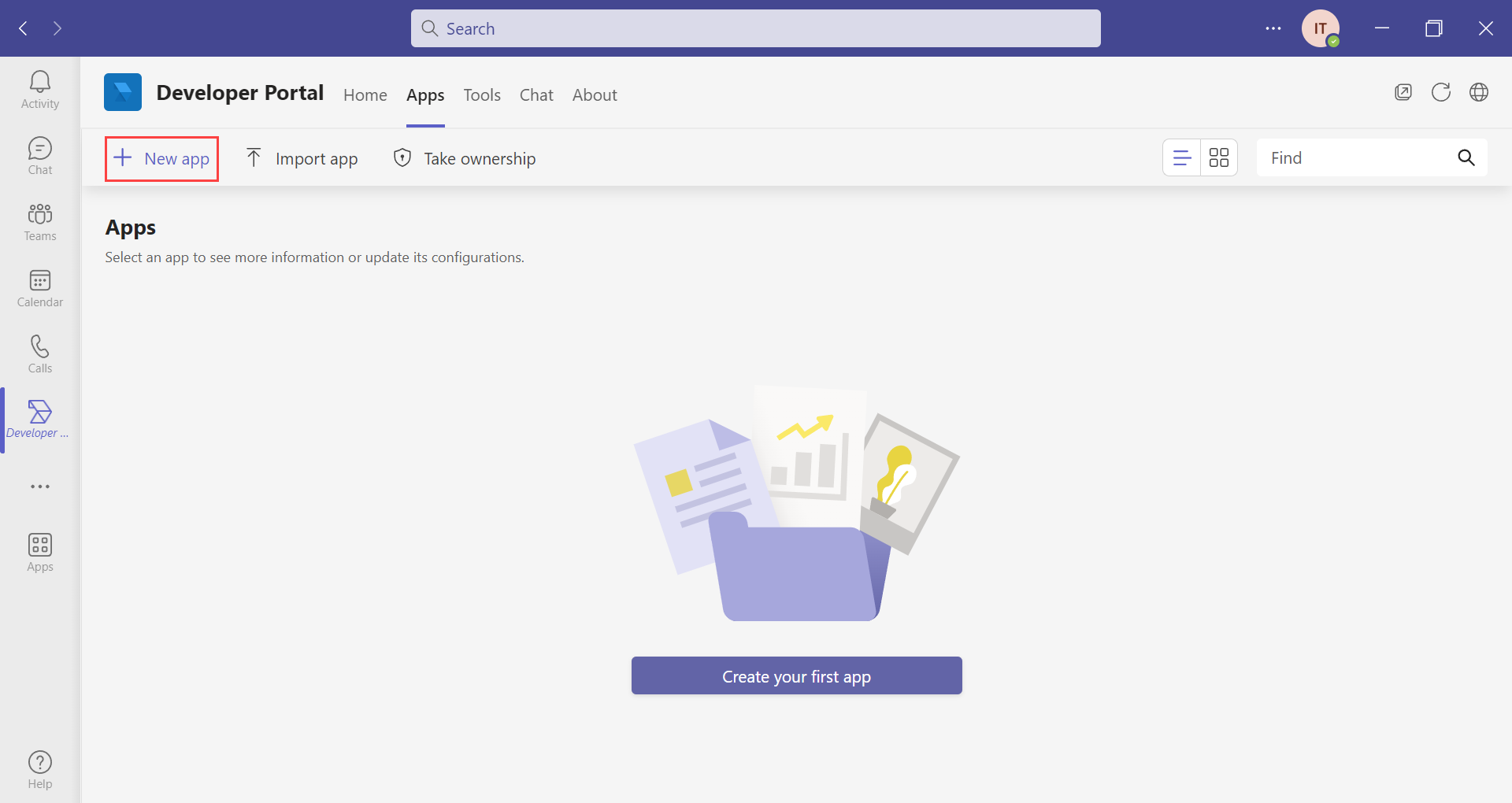
Step 4: Create a new app by clicking the "New app" option. You can also click the option "Import app" and select the sample zip file provided by Motadata. To download the sample zip file, click here.
Step 5: Enter the App name and click Add. Here, the Motadata Virtual Agent app is created.
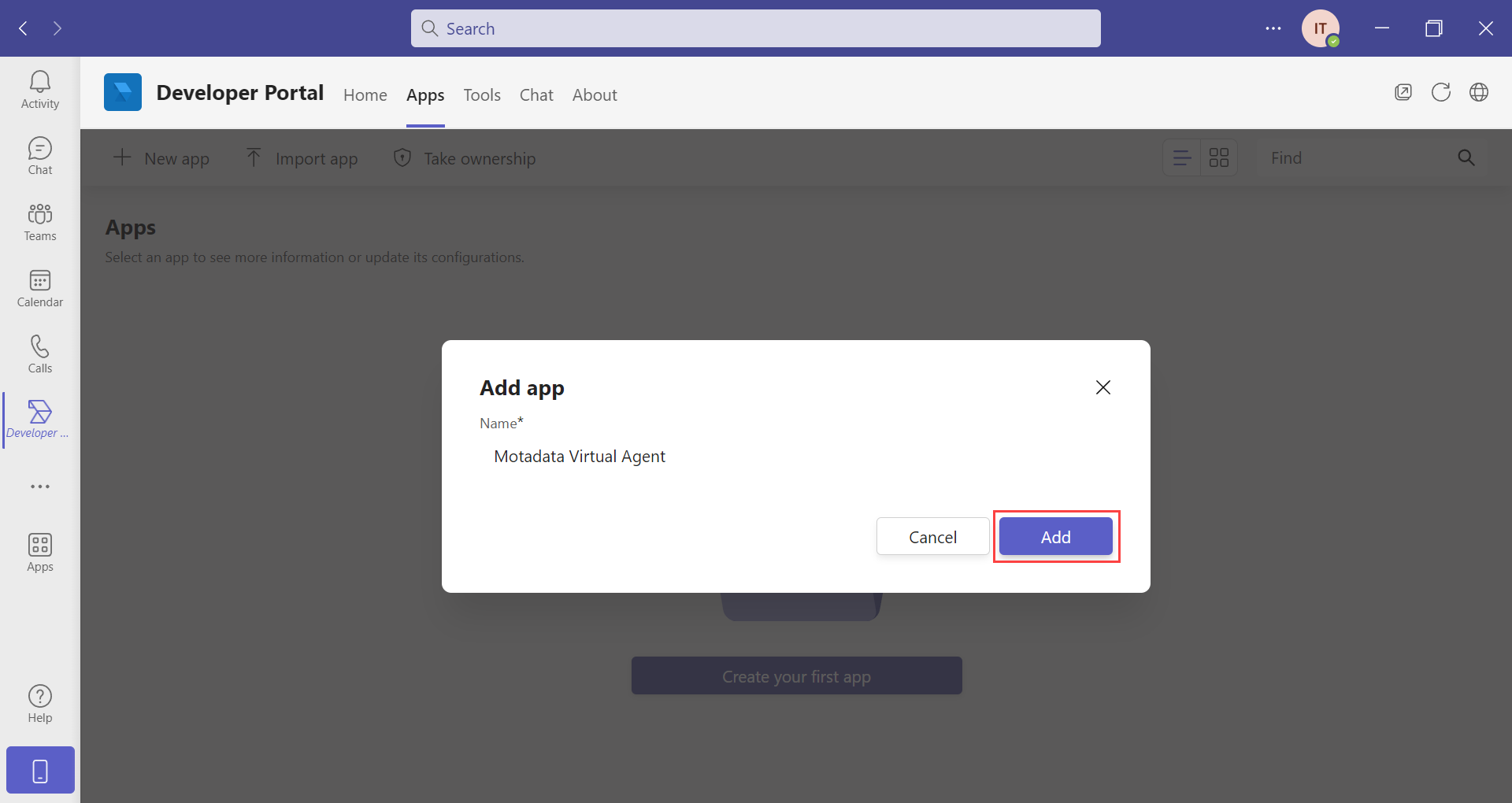
Step 6: Navigate to Configure > Basic Information page and enter the below details:
- Descriptions: Enter the short and long descriptions of the App. These are mandatory fields.
- Developer Information: Enter the Developer/Company name and Website URL. These are mandatory fields.
- App URLs: Enter the URLs of the privacy policy and terms of use. These are mandatory fields.
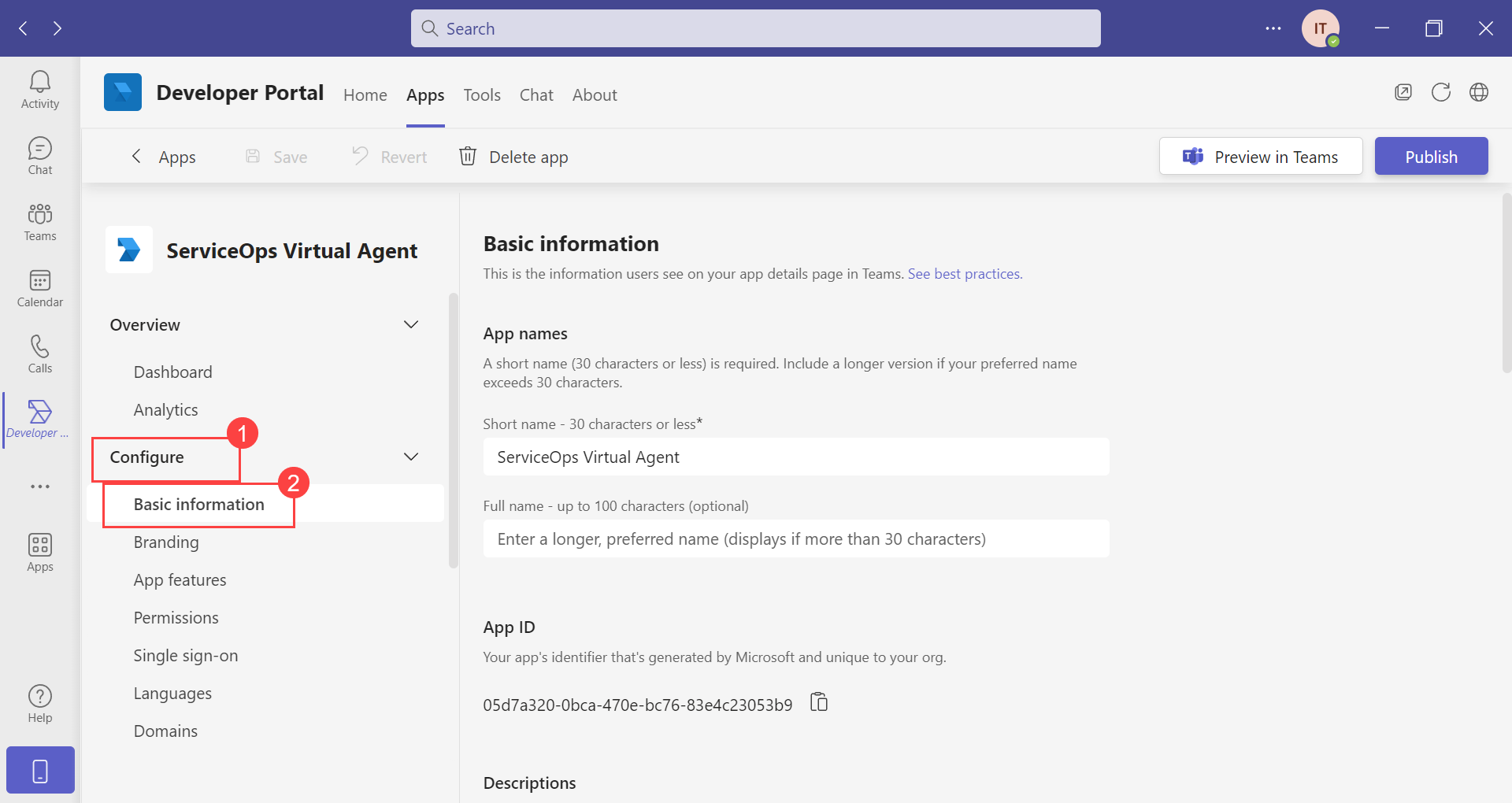
Once done, click Save.
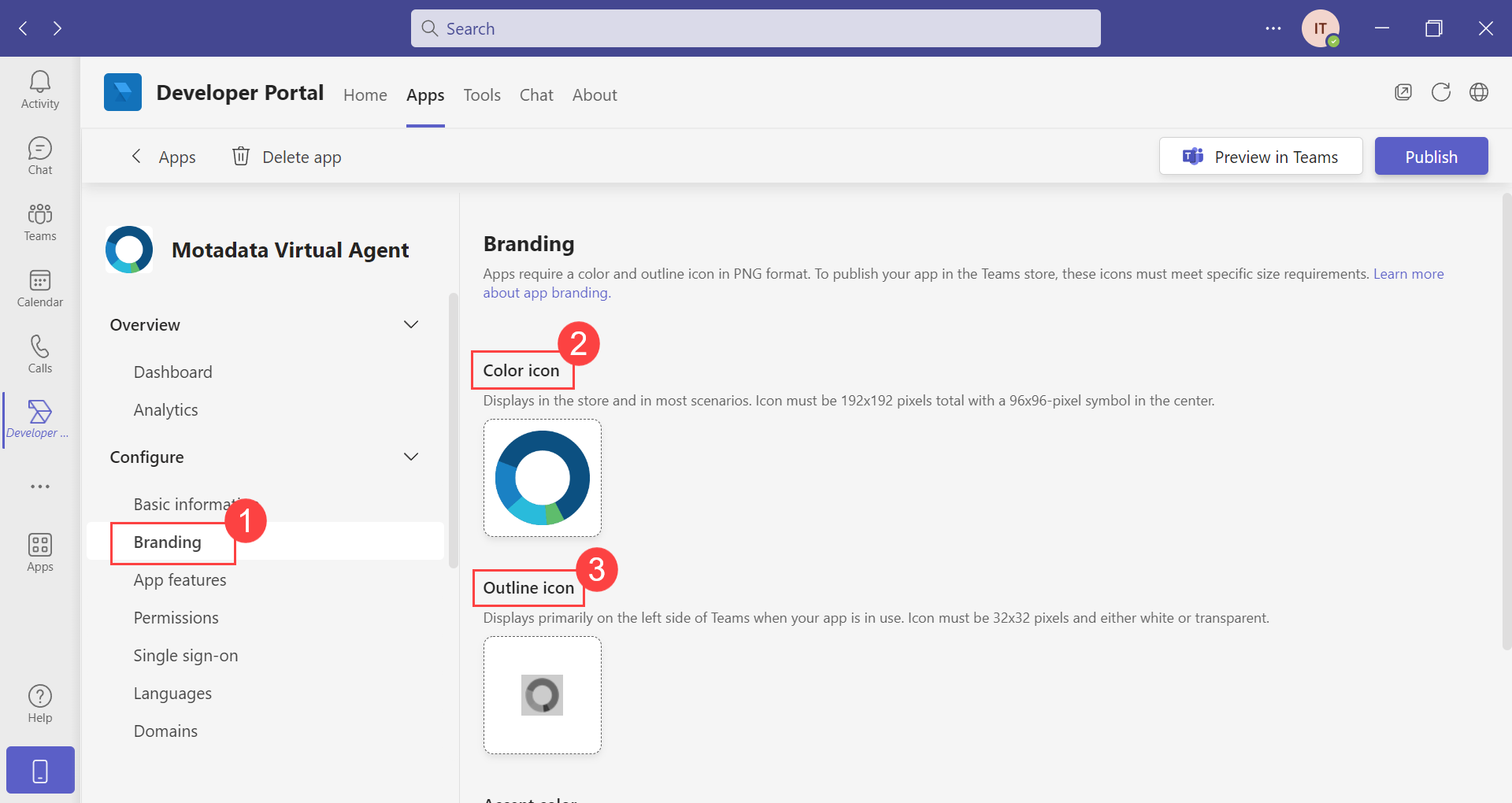
Step 7: In the Branding tab, set the Color and Outline icons for the App.
The Outline icon should be 32x32 pixels and greyscale.
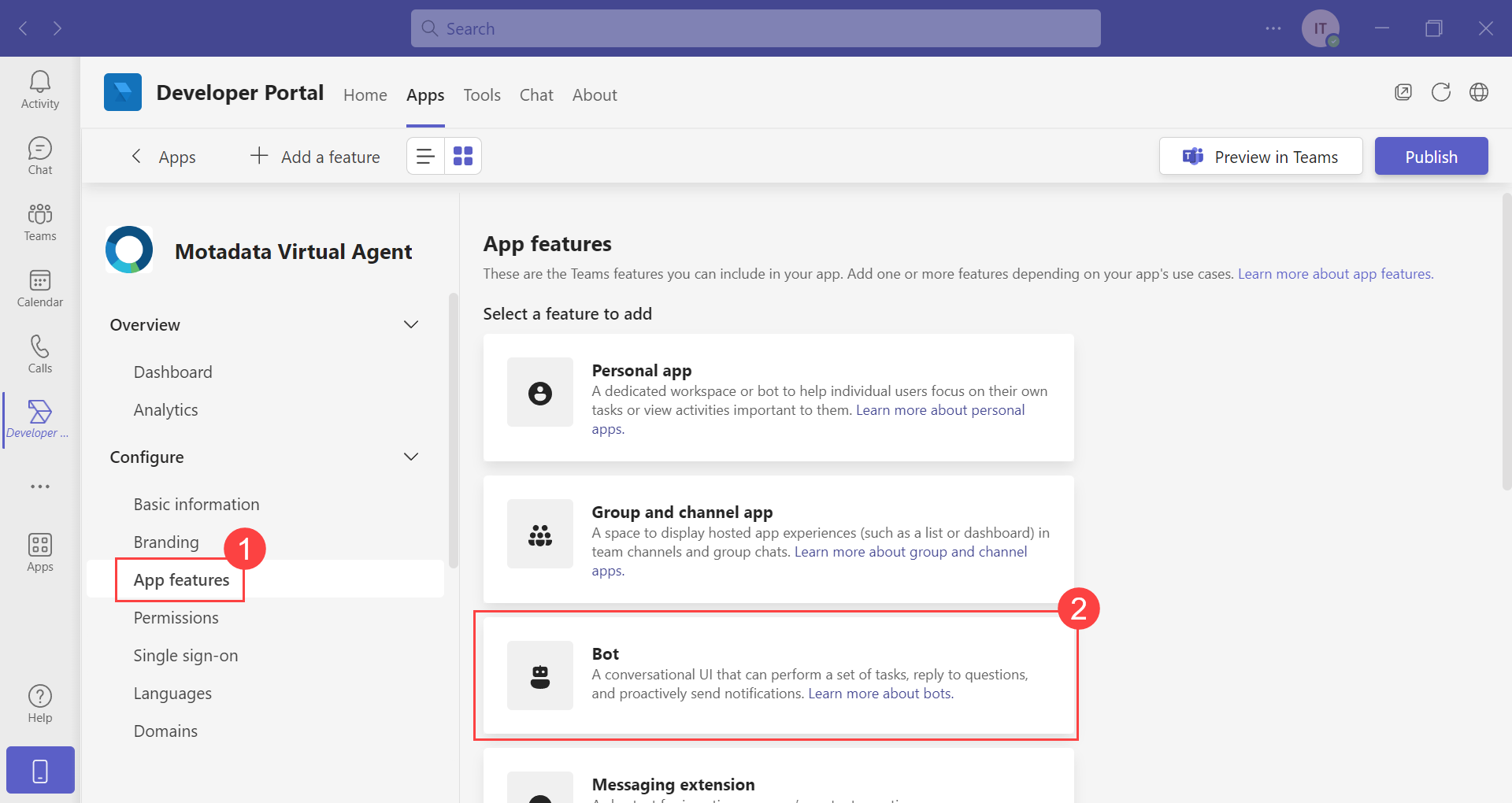
Step 8: In the App Features, select Bot.
Step 9: Click Create a new bot or select the existing one from the dropdown.
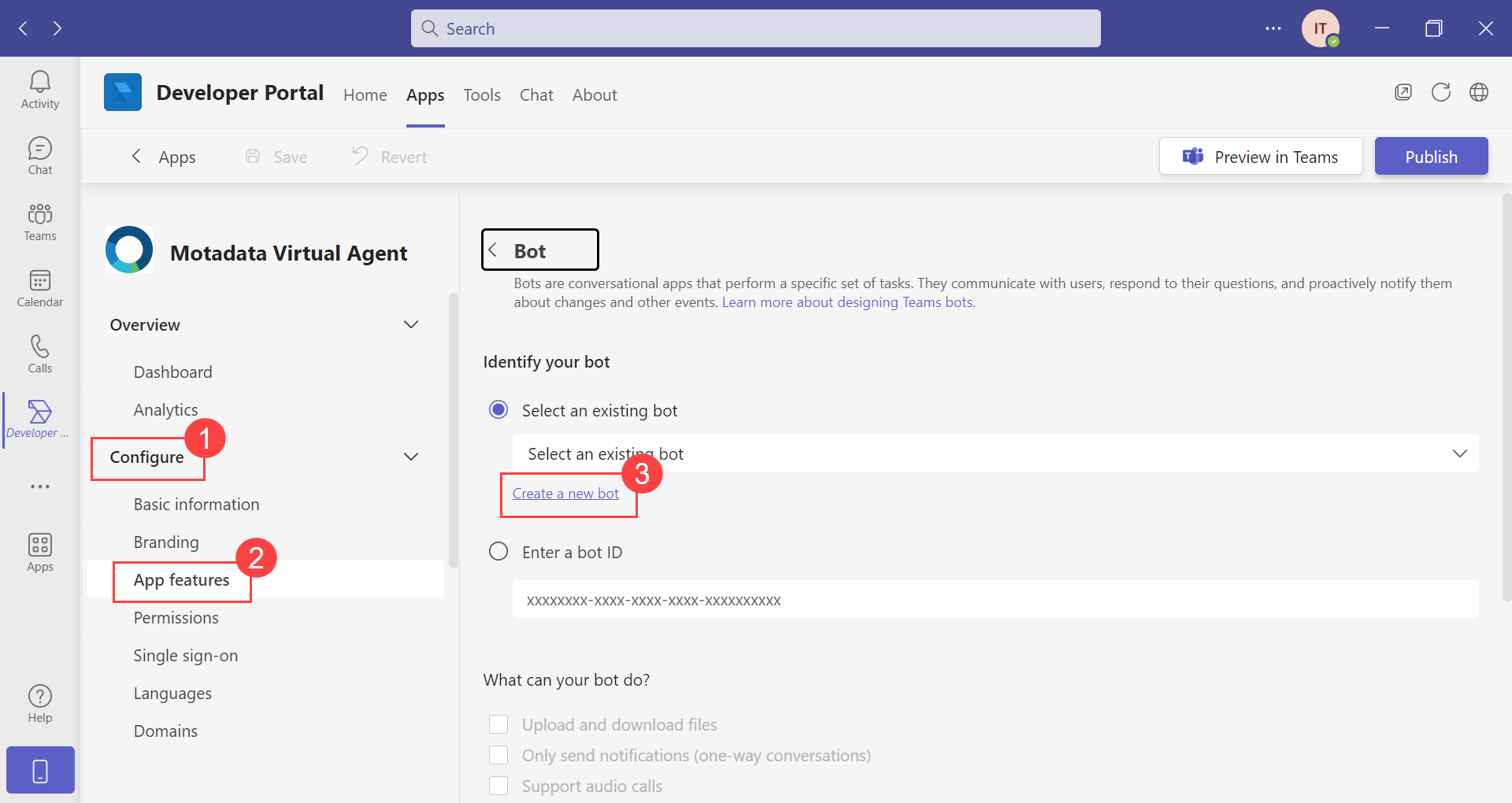
If "create a new bot" is selected, the Bot Management page appears. You can also create a bot from the Tools tab > Bot Management page.
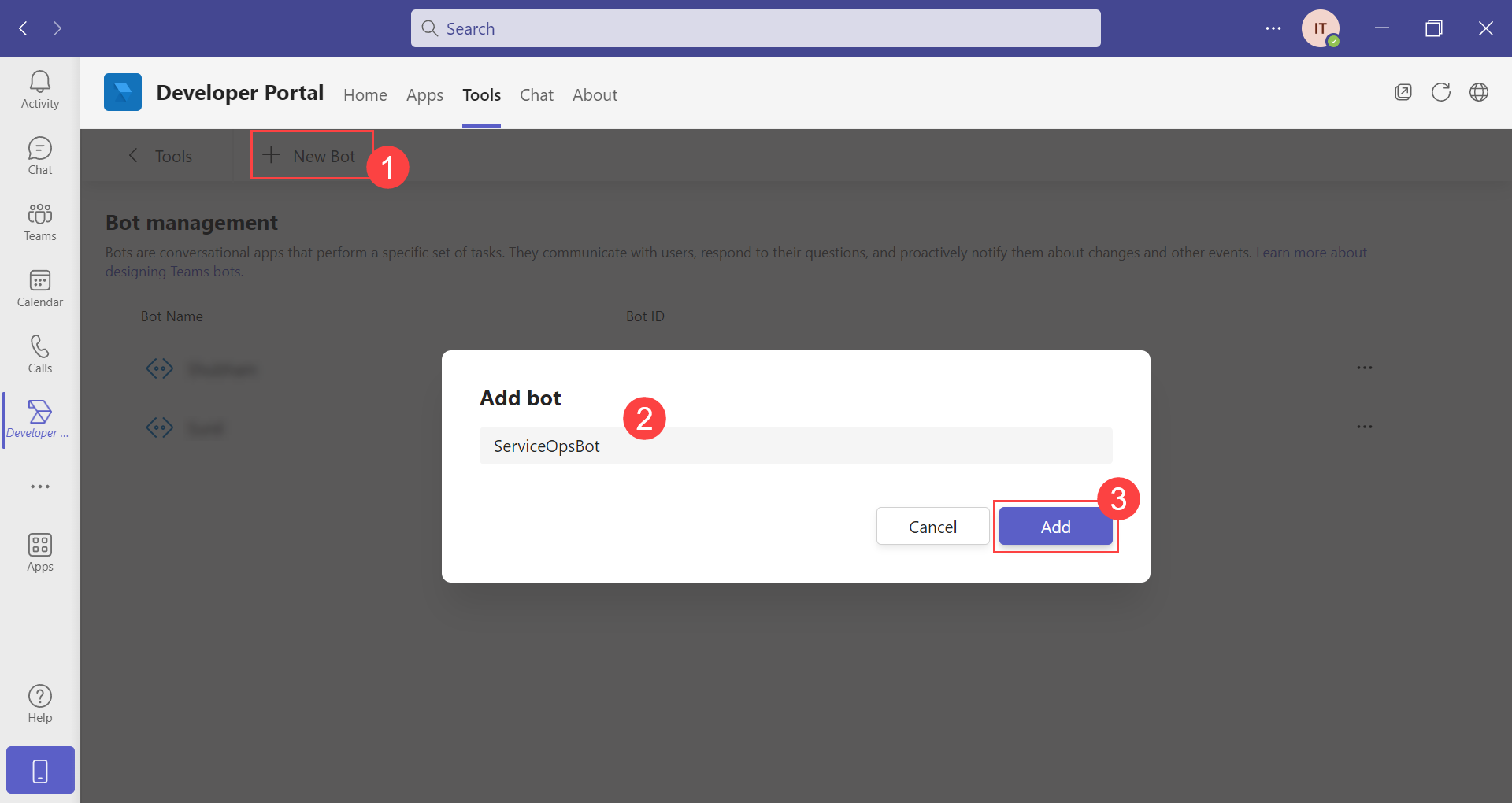
Step 10: Click New Bot, enter the bot’s name, and click Add.
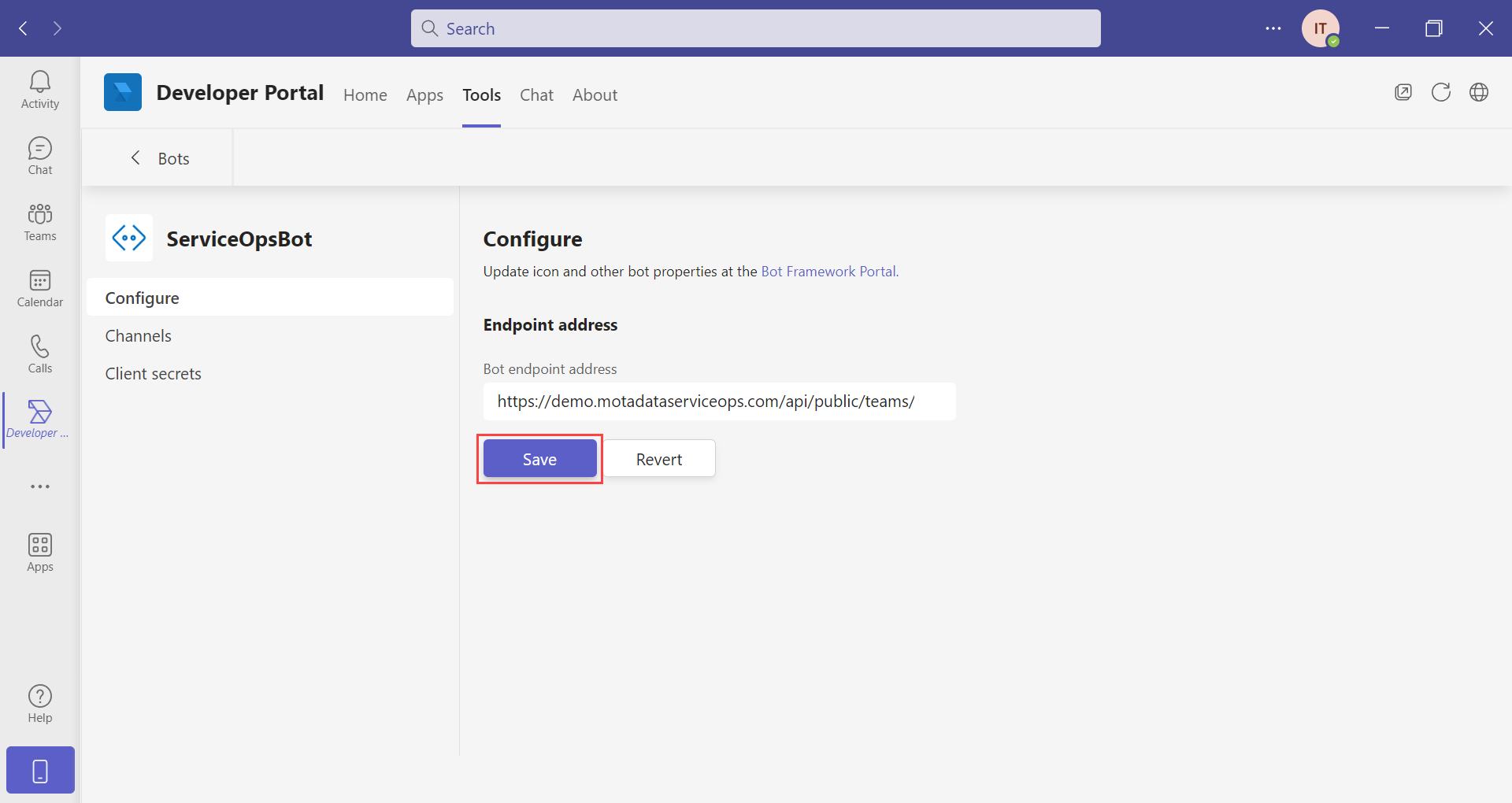
Step 11: Configure the bot endpoint address and click Save. Change the base URL before the "/api/public/teams/readMessage" section, as shown below. It is the HTTPS URL on which Teams will send the message.
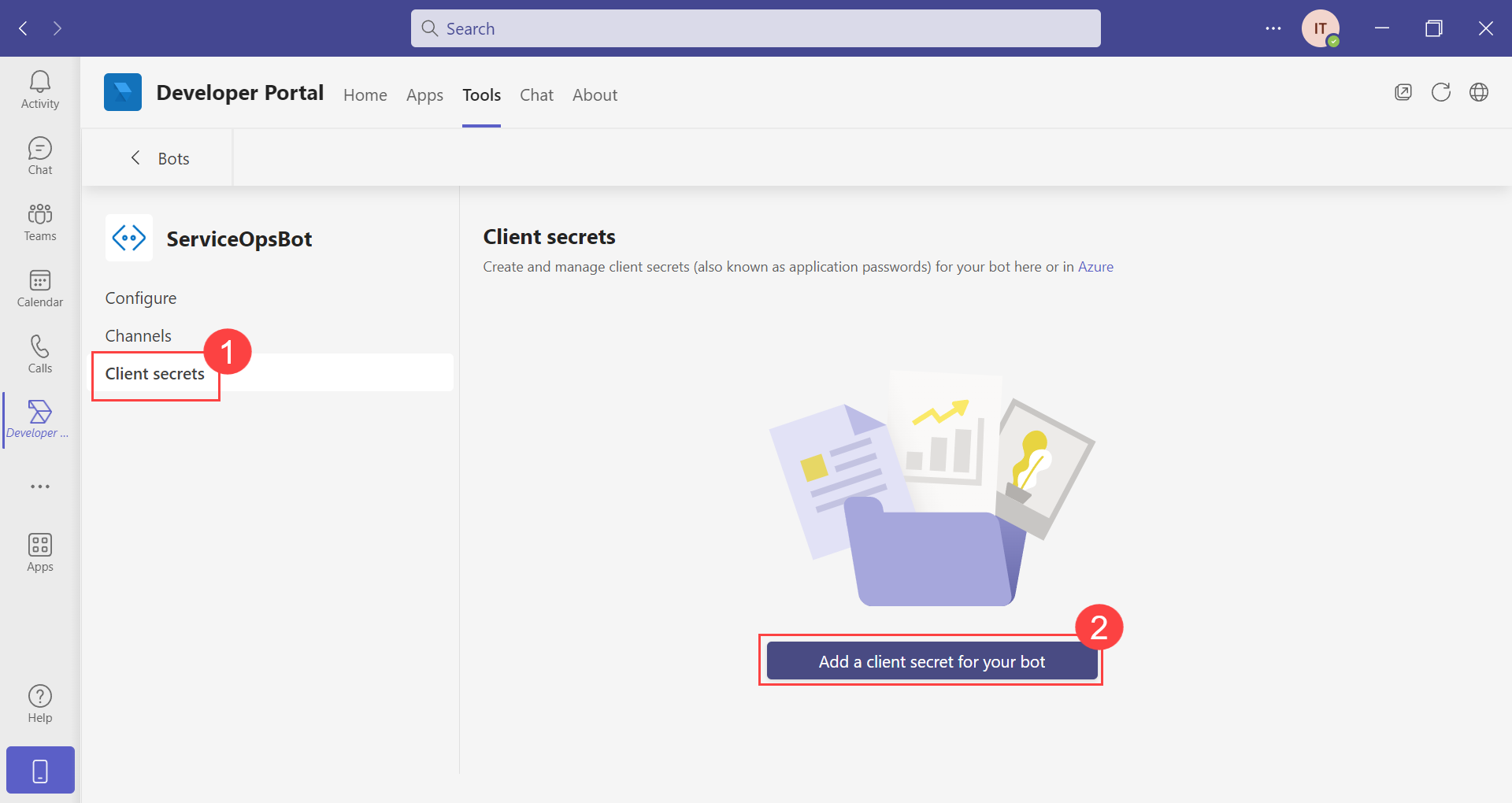
Step 12: Navigate to the Client secrets tab and click the "Add a client secret for your bot" button.
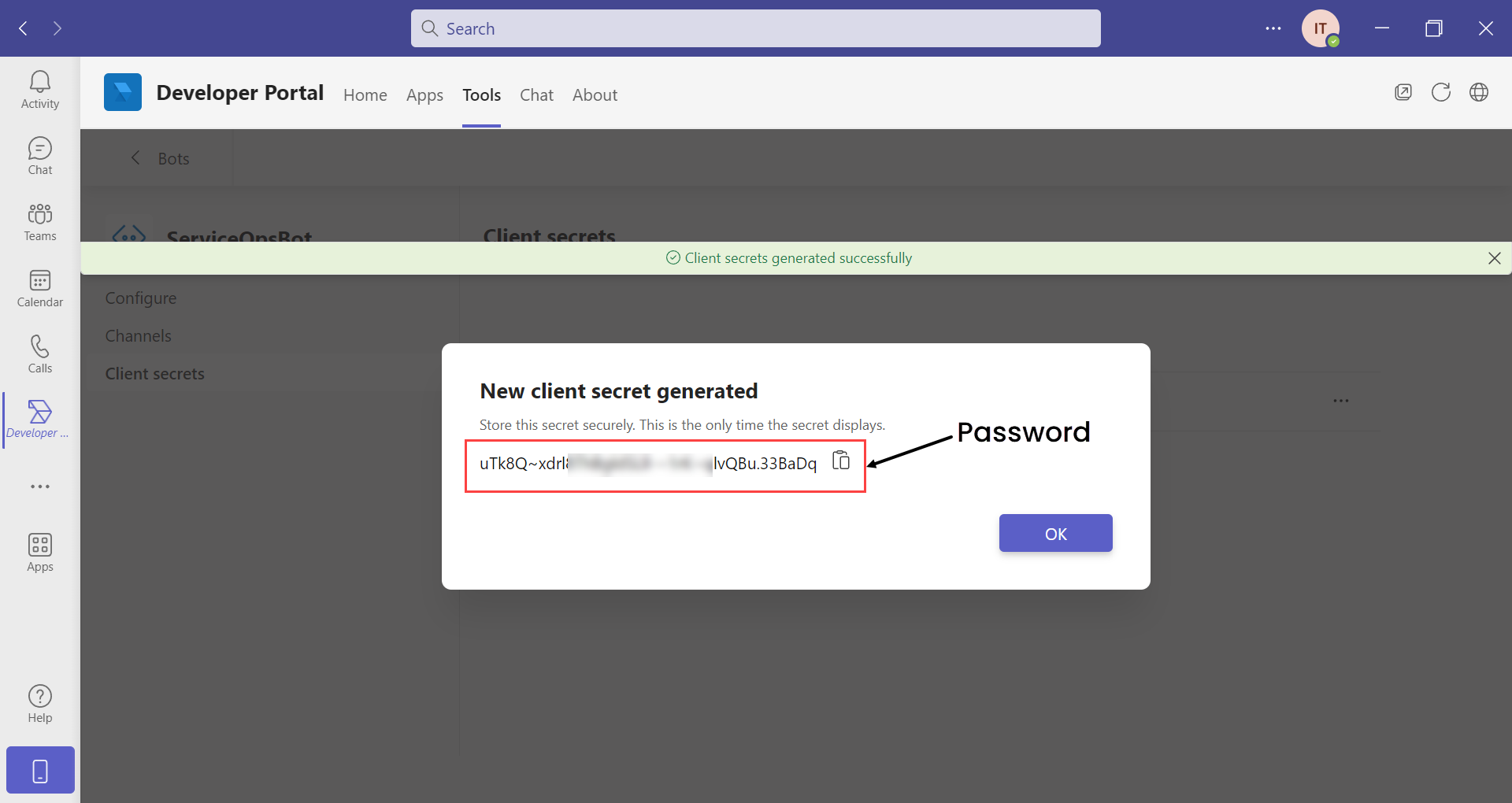
The client's secret will get generated and appear on the screen, as shown below. Copy this secret and paste it into ServiceOps in the Password field.
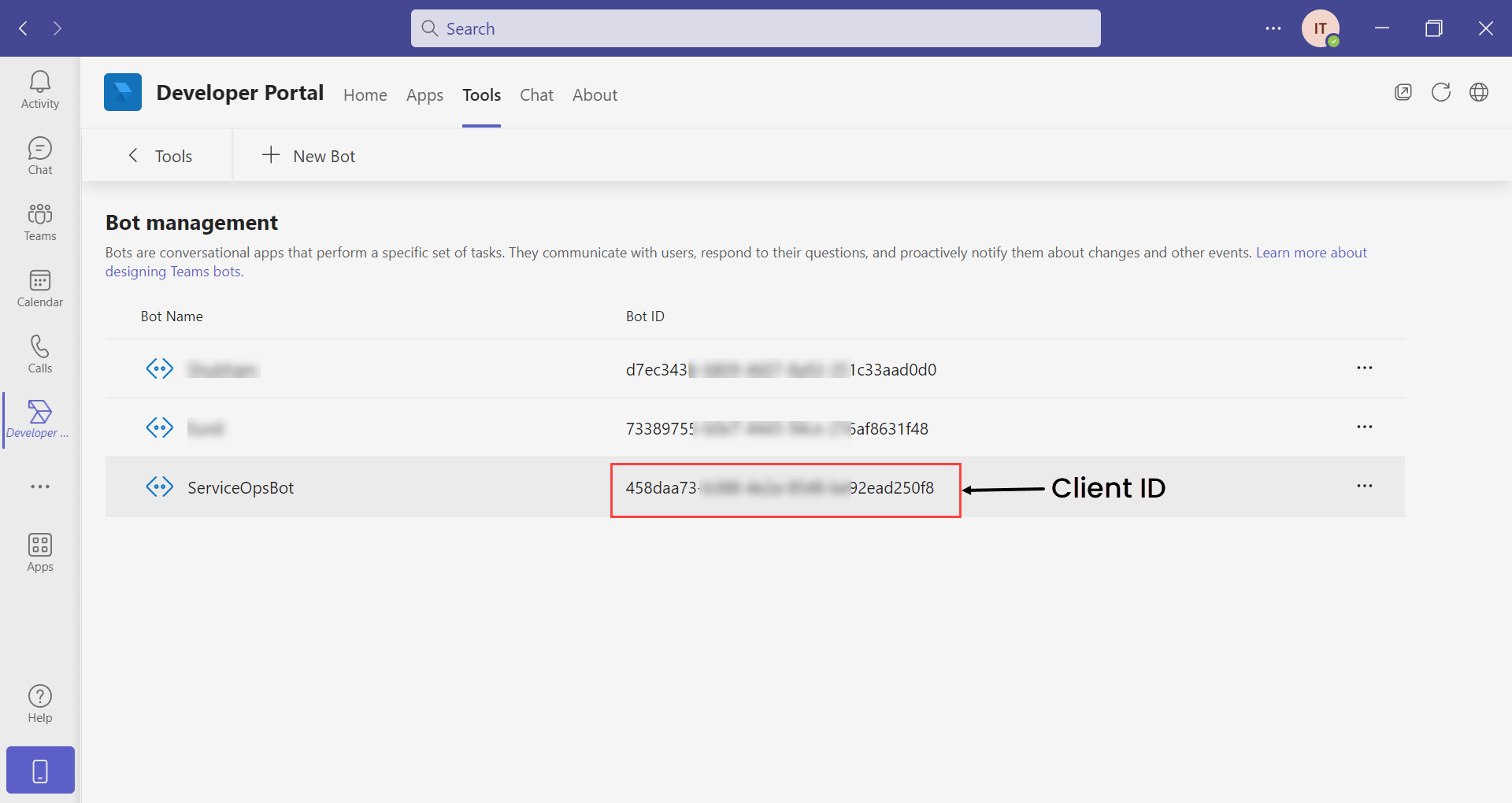
The Bot is now created and appears on the Bot Management as shown below. Copy the Bot ID and paste it into ServiceOps in the Client ID field.
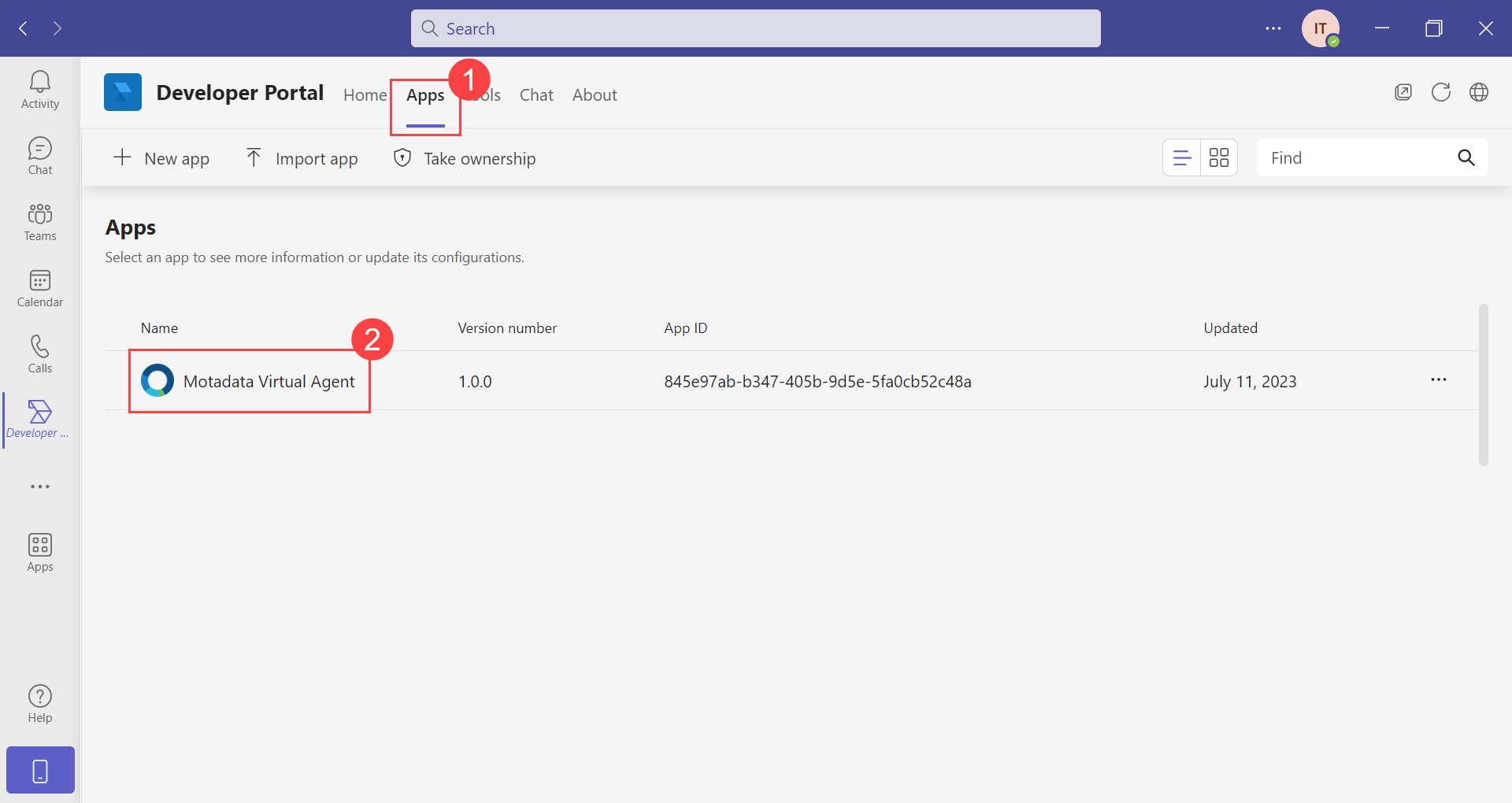
Step 13: Now, navigate to the Apps tab, and edit the created App (here, Motadata Virtual Agent) by clicking on it.
Step 14: Navigate to Configure > App features > Bot, select the Bot from the "Select an existing bot" dropdown, and select the below required capabilities for the bot:
- Upload and download files: Allows the bot to handle file uploads and downloads.
- Only send notifications (one-way conversations): Enables the bot to send one-way notifications without expecting a response.
- Support audio calls: Allows the bot to participate in audio calls.
- Support video calls: Allows the bot to participate in video calls.
And select the required scope for the Bot:
- Personal: For direct one-on-one conversations.
- Team: For use within a team or channel.
- Group Chat: For use in group chats.
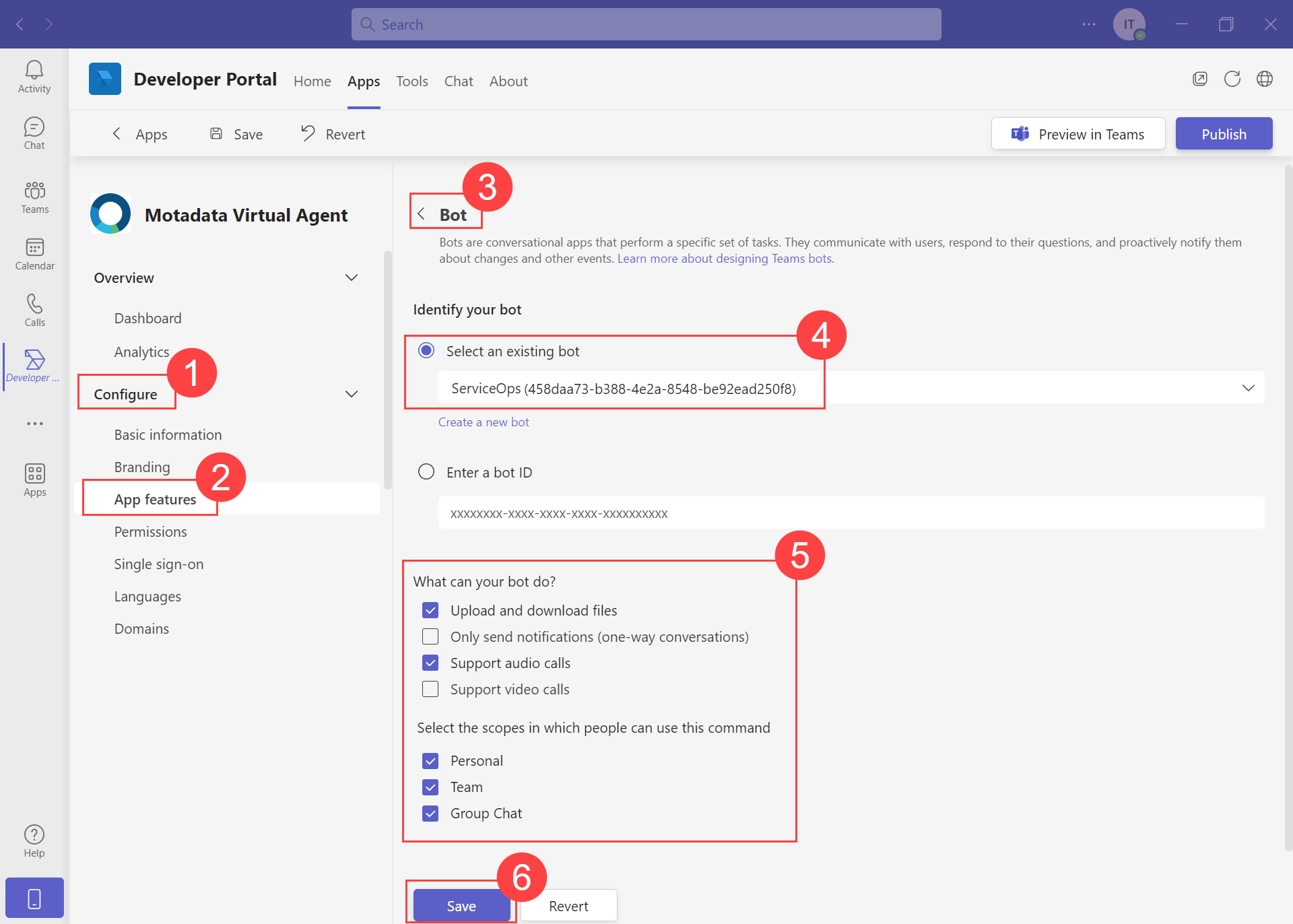
Once done, click Save.
Step 15: Download the app package from the App list page below.
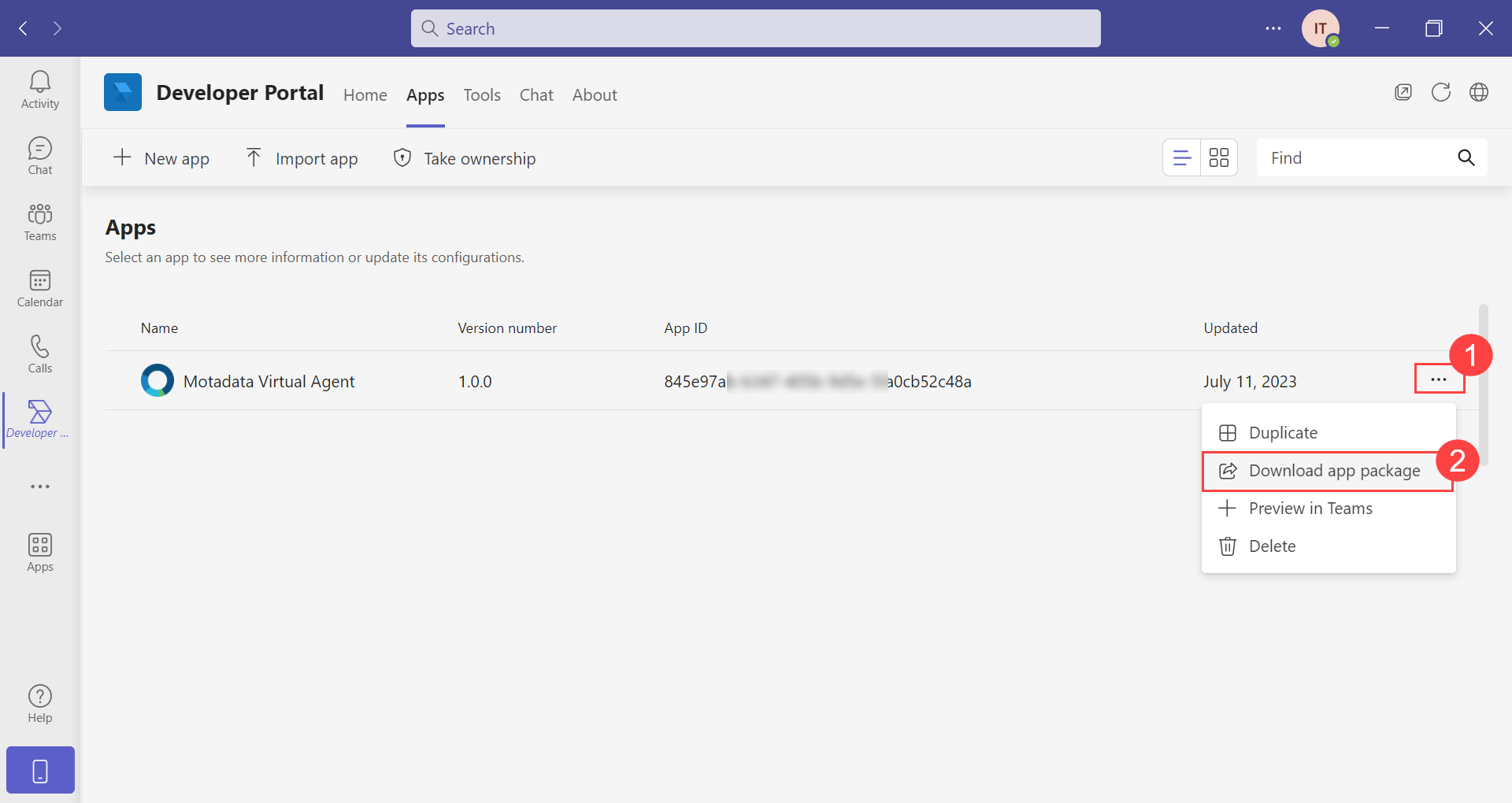
Step 16: In the ServiceOps Portal, navigate to Admin > Support Channel > Virtual Agent > Teams App Config page.

Enable the Teams functionality to allow requesters to chat via the Teams application and configure the below settings.
- Allow Notification: Enable to send notifications to the Teams application. By default, it is disabled.
Teams notifications support only those events that are displayed in the App Notifications tab.
- Client ID: Paste the Client ID (Bot ID) copied from the Teams application in Step 12.
- Password: Paste the password (Client secret) copied from the Teams application in Step 12.
- Attachments: Attach the app zip file downloaded from the Teams application in Step 15.
Once done, click Update.
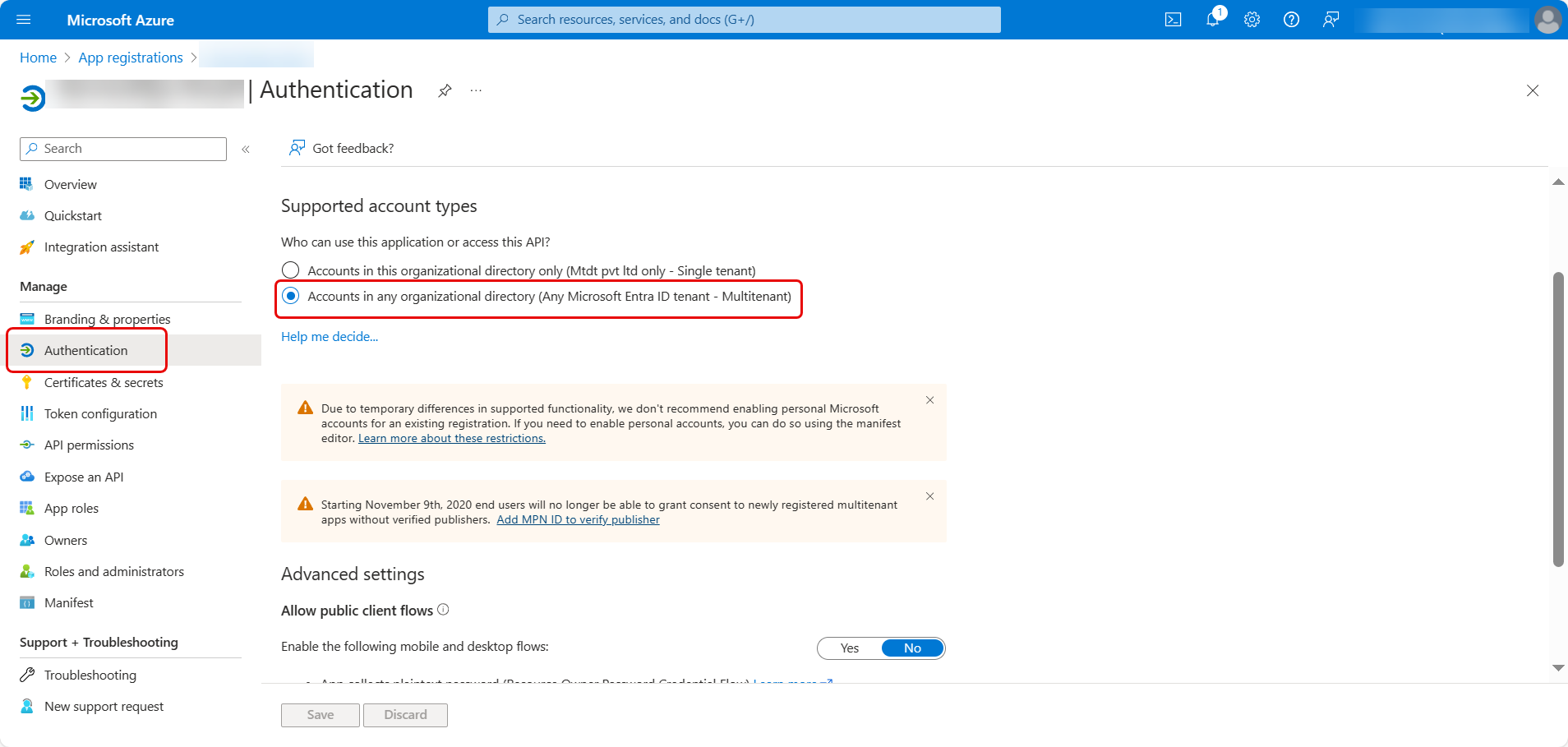
Step 17: Next, login to the Microsoft Azure portal, navigate to App Registrations > Motadata Virtual Agent > Manage > Authentication tab and enable the "Accounts in any organizational directory (Any Microsoft Entra ID - Multitenant)" field in the Supported account types section.
After creating the app in Microsoft Teams, it is automatically registered in the Microsoft Azure portal. Therefore, you will need to set up the authentication feature in Azure to enhance the functionality of your Teams application.
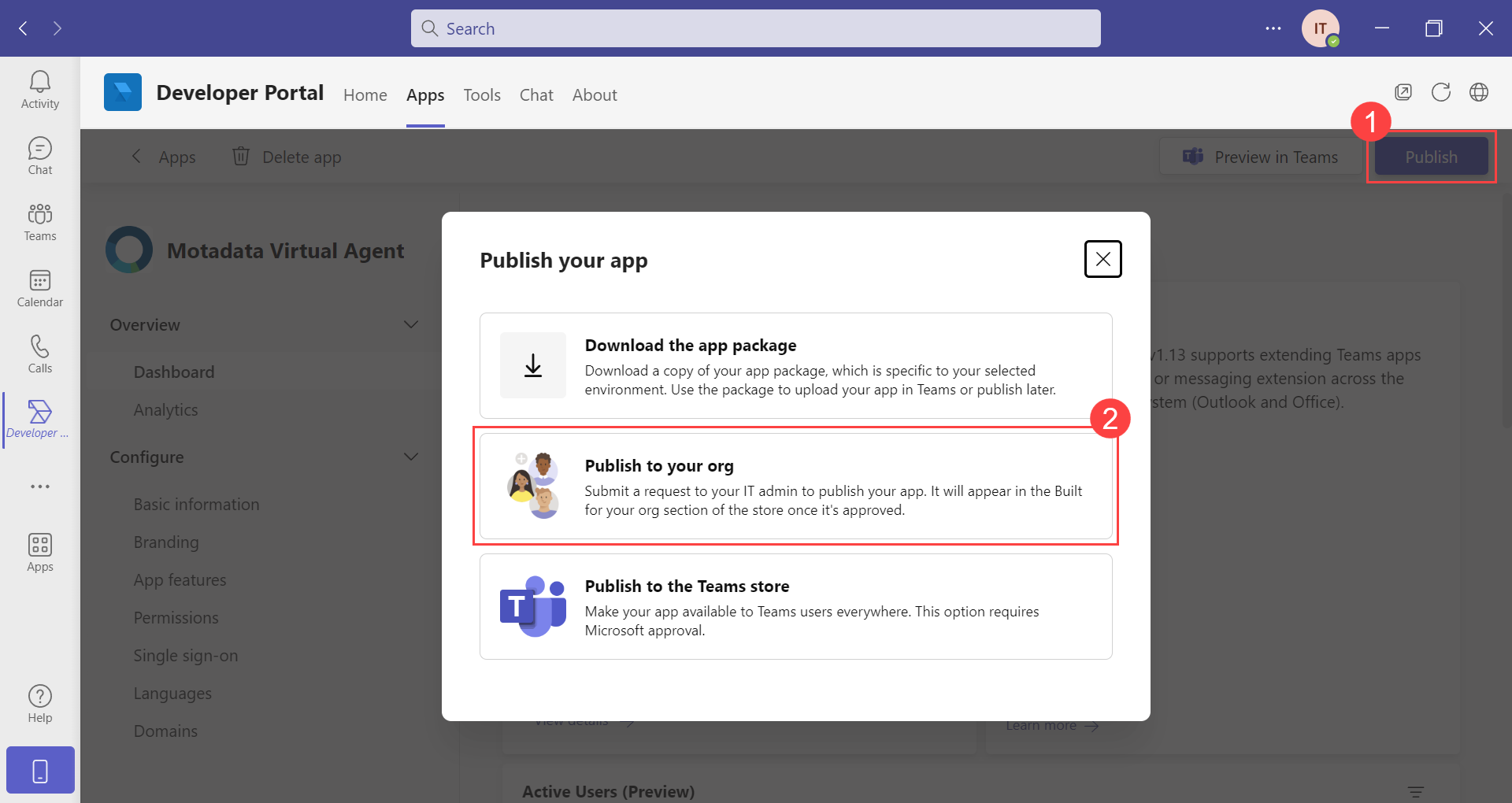
Step 18: In the Teams application, publish the App by clicking the Publish button and selecting "Publish to your org".
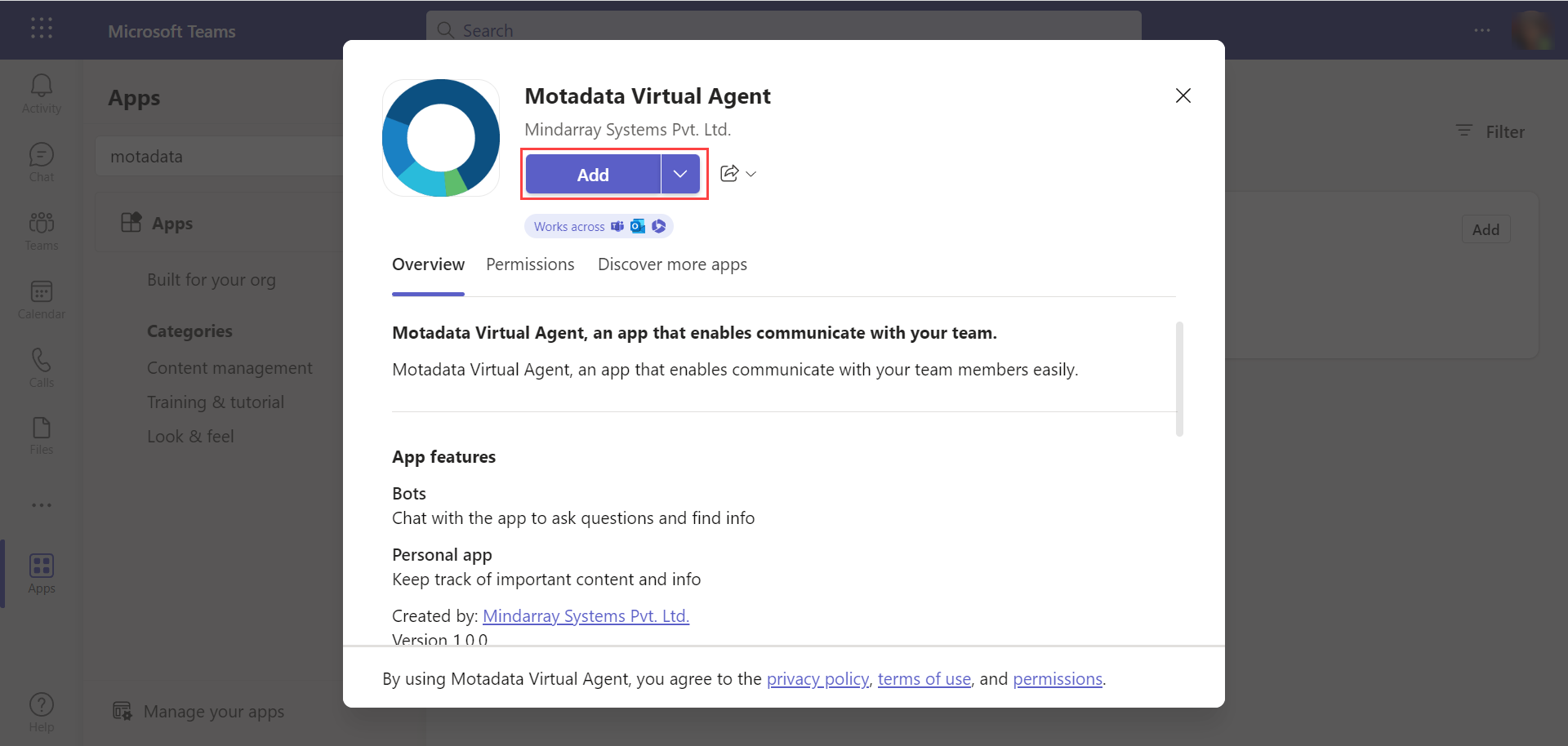
Once done, a request will be submitted to the IT Admin to publish the App. Once approved and published, it will appear in the apps list, as shown below.
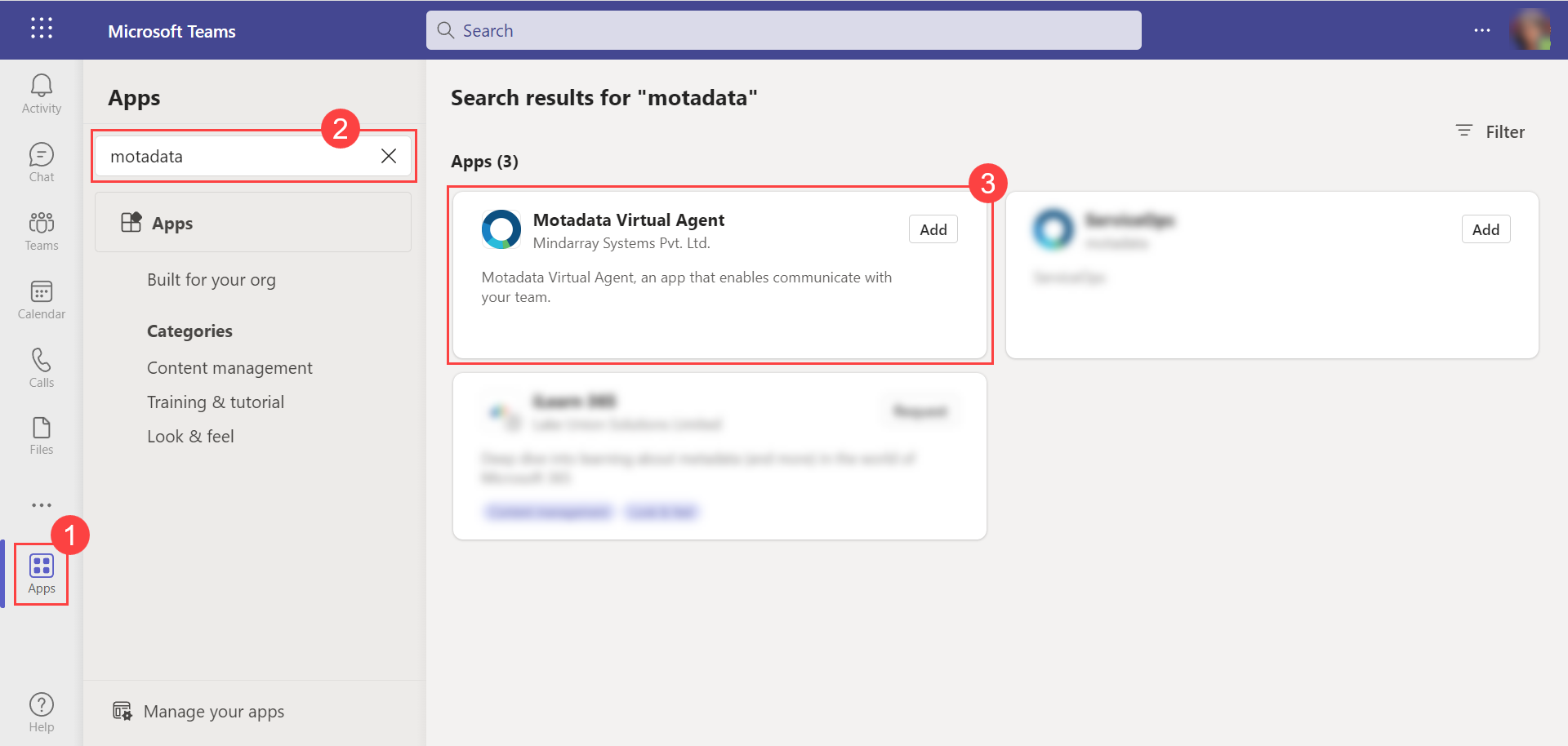
Step 19: Click on the App and Add it to the left panel.
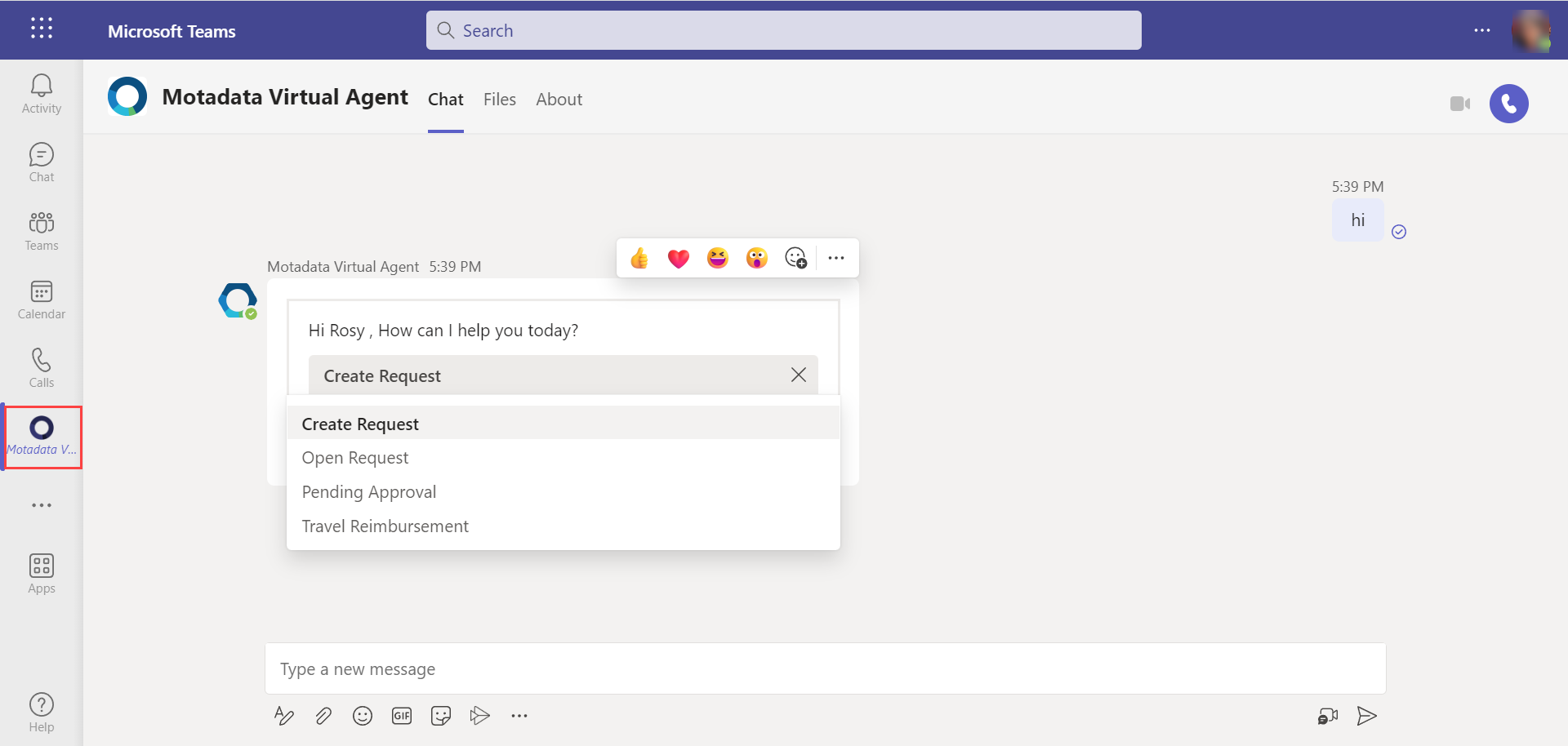
Step 20: Once added, type hi, and begin your conversation with the Motadata Virtual Agent.
Integration using the New Microsoft Teams Developer Portal
This approach uses the new Teams Developer Portal to configure and manage your Teams app directly.
Follow the below steps:
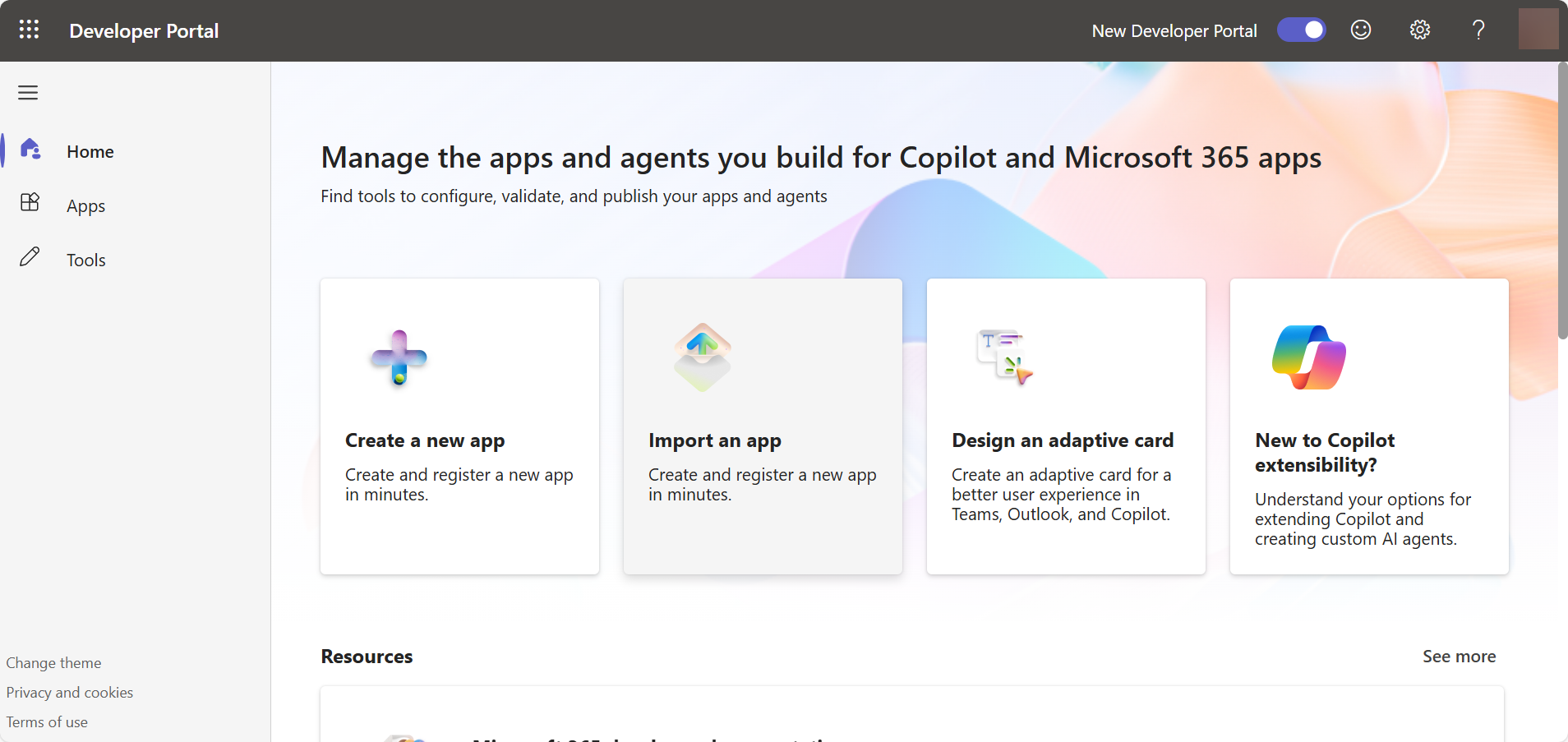
Open the Teams Developer Portal
Visit https://dev.teams.microsoft.com/home and log in with your Microsoft account.
- Create a new App.
On the left panel, select Apps menu, and click + New App. The following screen appears.
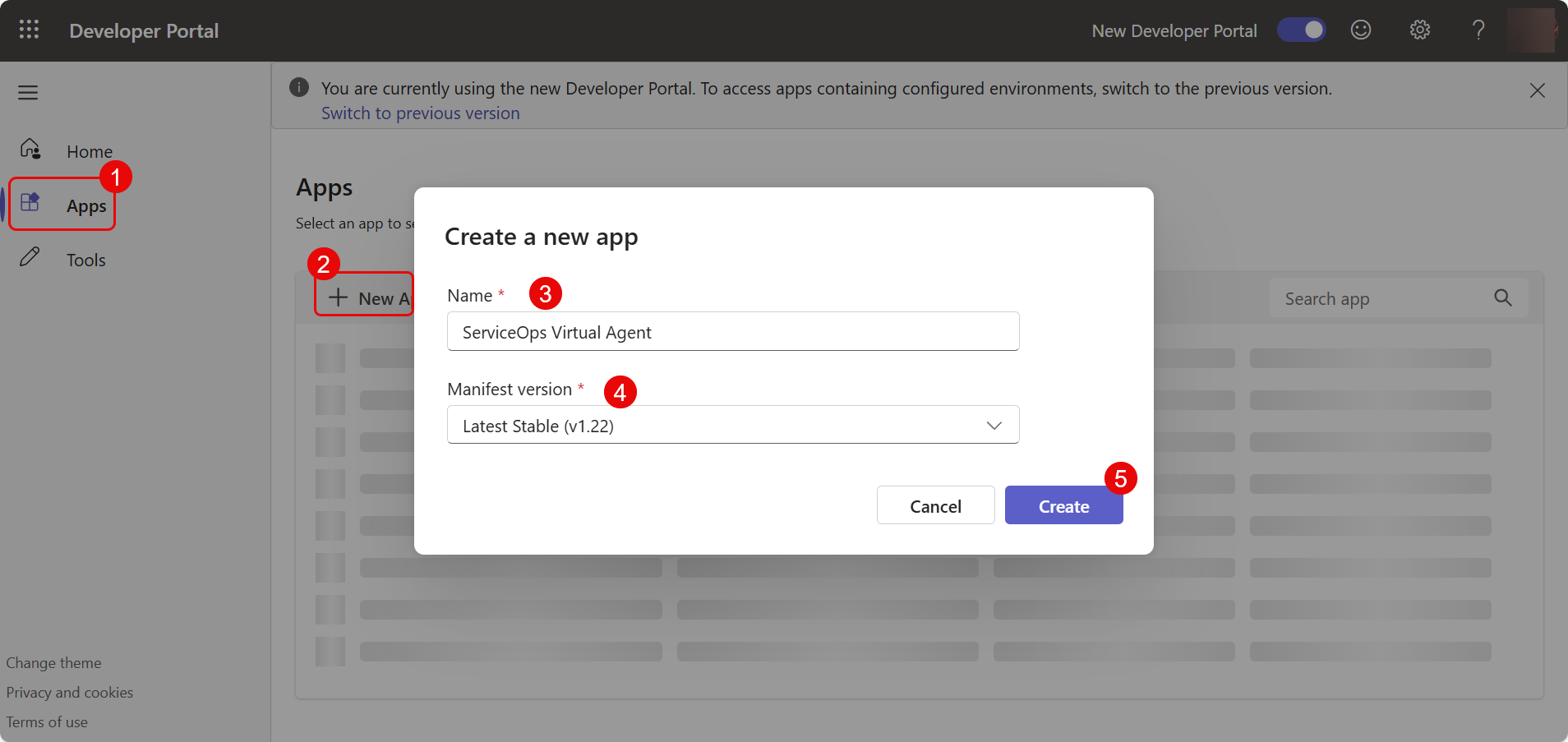
Provide the following details:
- App name: Enter the app name.
- Manifest version: Select Latest Stable (v1.22)
- Click Create.
Navigate to Configure > Basic Information and enter the below app details:
- Descriptions: Enter the short and long descriptions of the App. These are mandatory fields.
- Developer Information: Enter the Developer/Company name and Website URL. These are mandatory fields.
- App URLs: Enter the URLs of the privacy policy and terms of use. These are mandatory fields.

Once done, click Save.
Configure App Branding & Details
Add icons, color themes, and other settings.

Configure Bot
Navigate to App features > Bot section.

Click Create a new bot or select an existing bot if one is already registered in Azure.
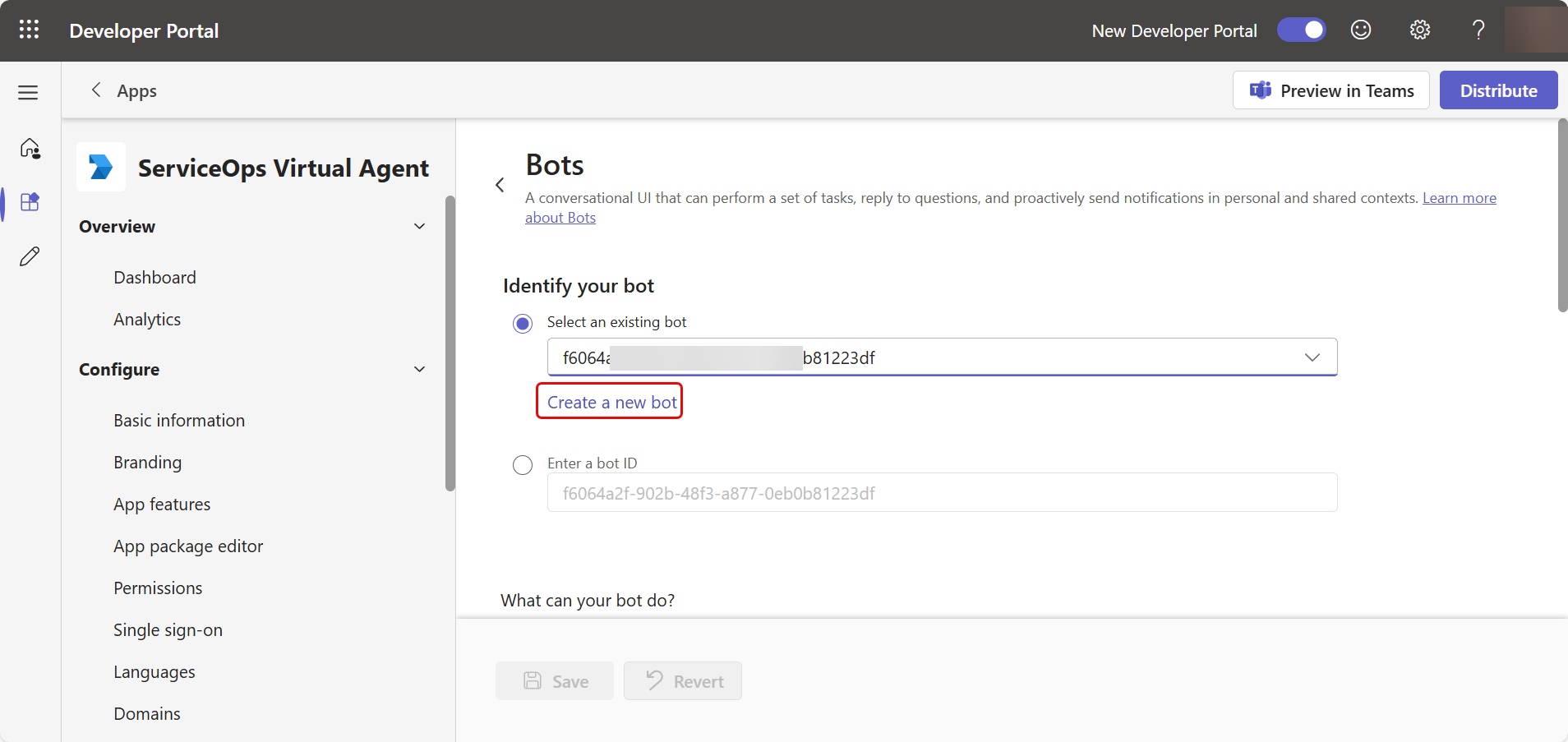
If you choose to create a new bot, the following Bot Management page will appear.

Click + New bot, enter the Bot name, and click Create Bot.
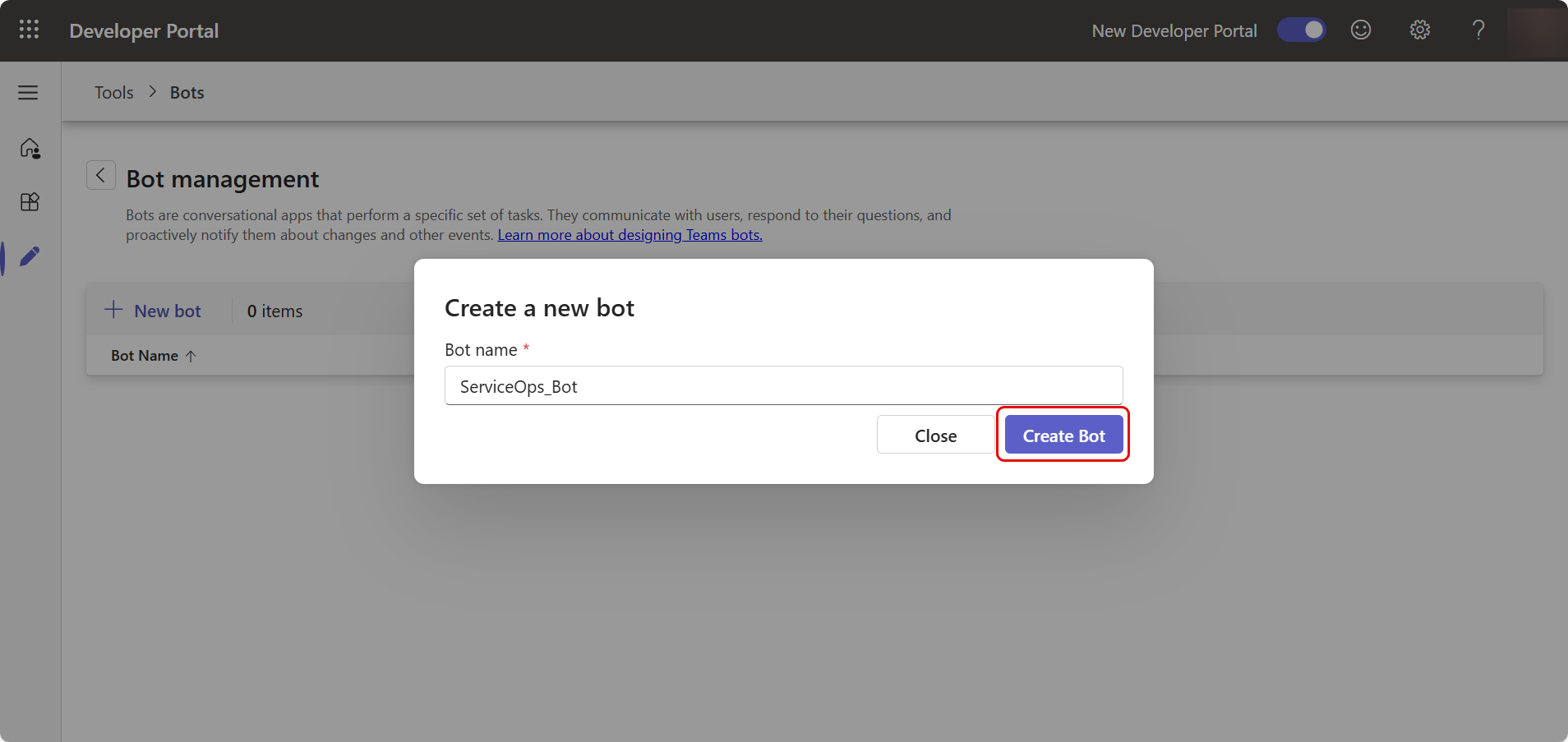
Configure Bot:
- Enter the Endpoint address (ServiceOps Base URL) and click Save. Change the base URL before the "/api/public/teams/readMessage" section, as shown below. It is the HTTPS URL on which Teams will send the message. For example, https://novelx.serviceops.ai/api/public/teams/readMessage

Now, go back to Apps > App Name (here, ServiceOps Virtual Agent) > Configure > App Features > Bot and select the created bot as shown below.

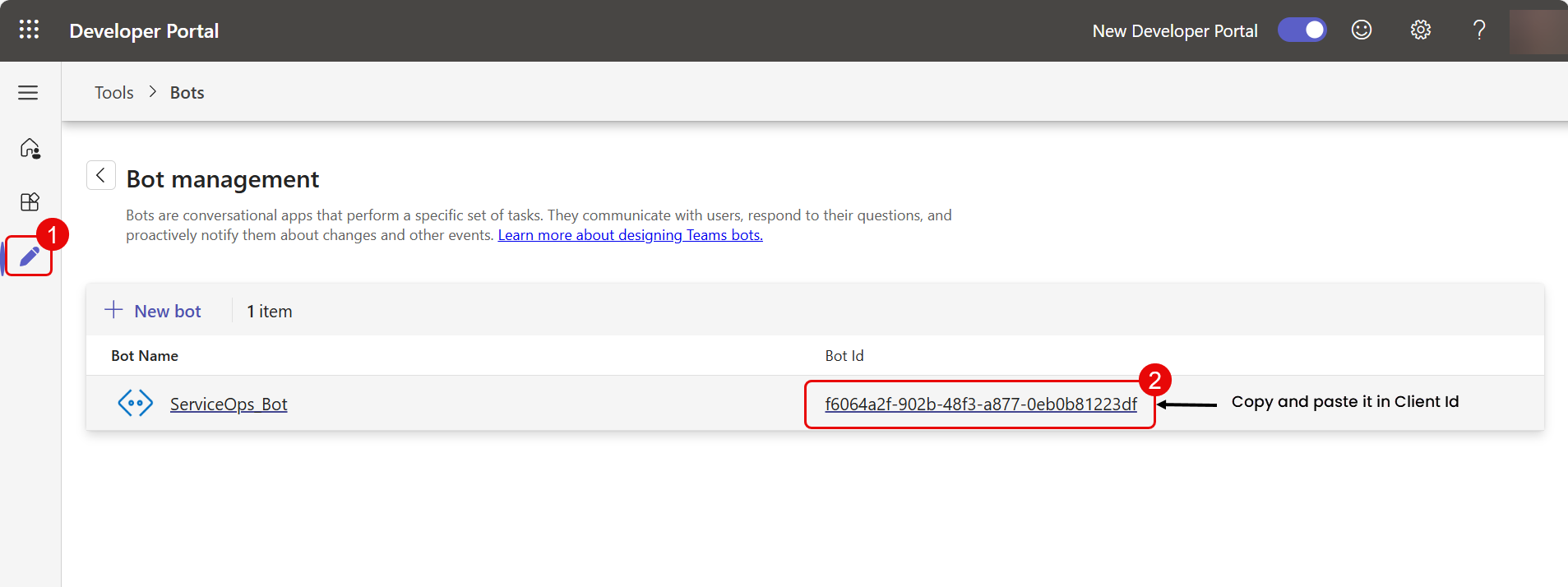
Set scopes to include Personal, Team, and Group Chat. Click Save. The bot will appear in the Bot management as shown below. Here, copy the Bot id and paste it in the Client Id field of ServiceOps.
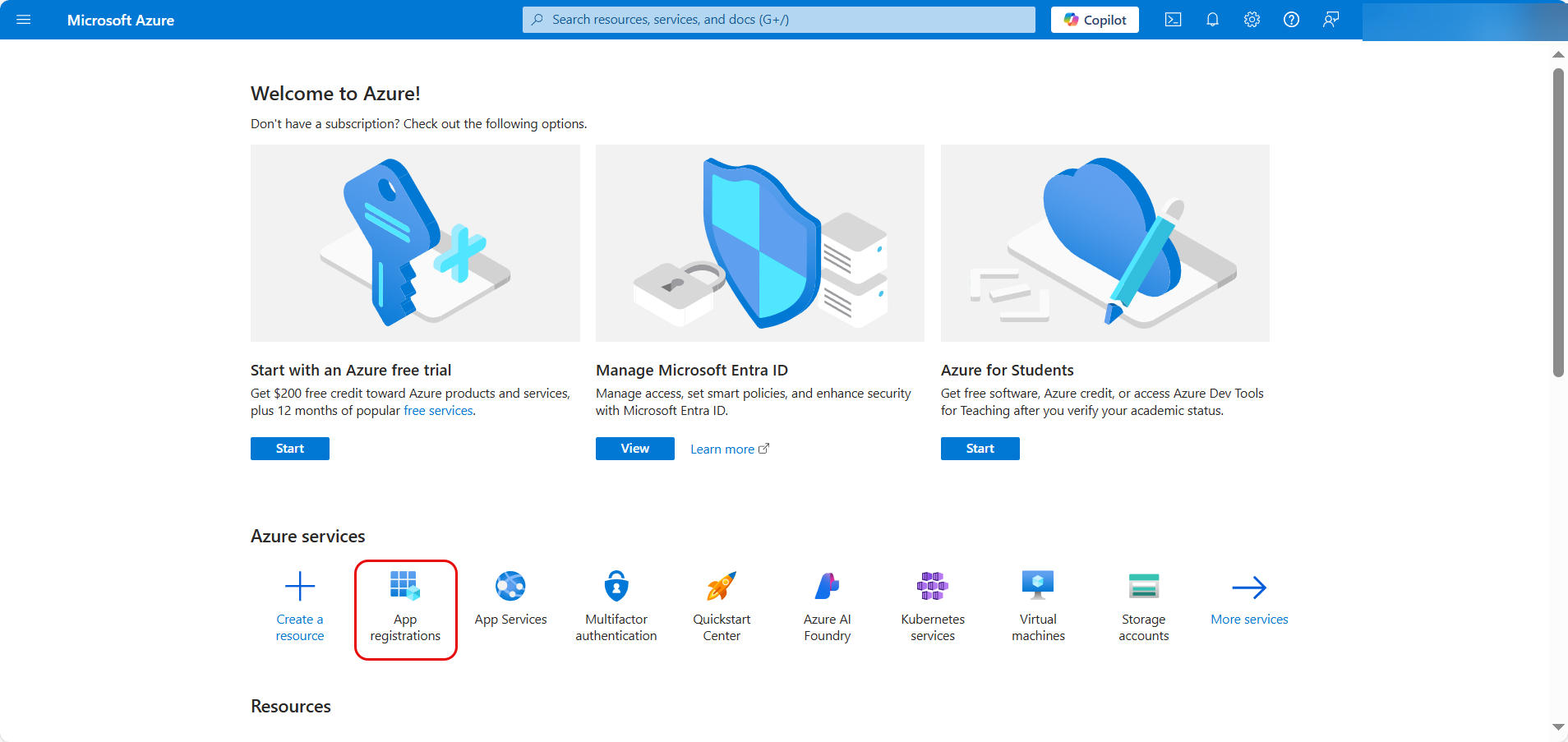
Open the azure portal using the link "https://portal.azure.com/#home". Sign In to the portal if you are not signed-in.
Click App Registrations.
- In the Owned Applications, select the created bot as shown below.

- Navigate to Certificates & secrets, click New client secret, add description and expiry if required, and click Add.
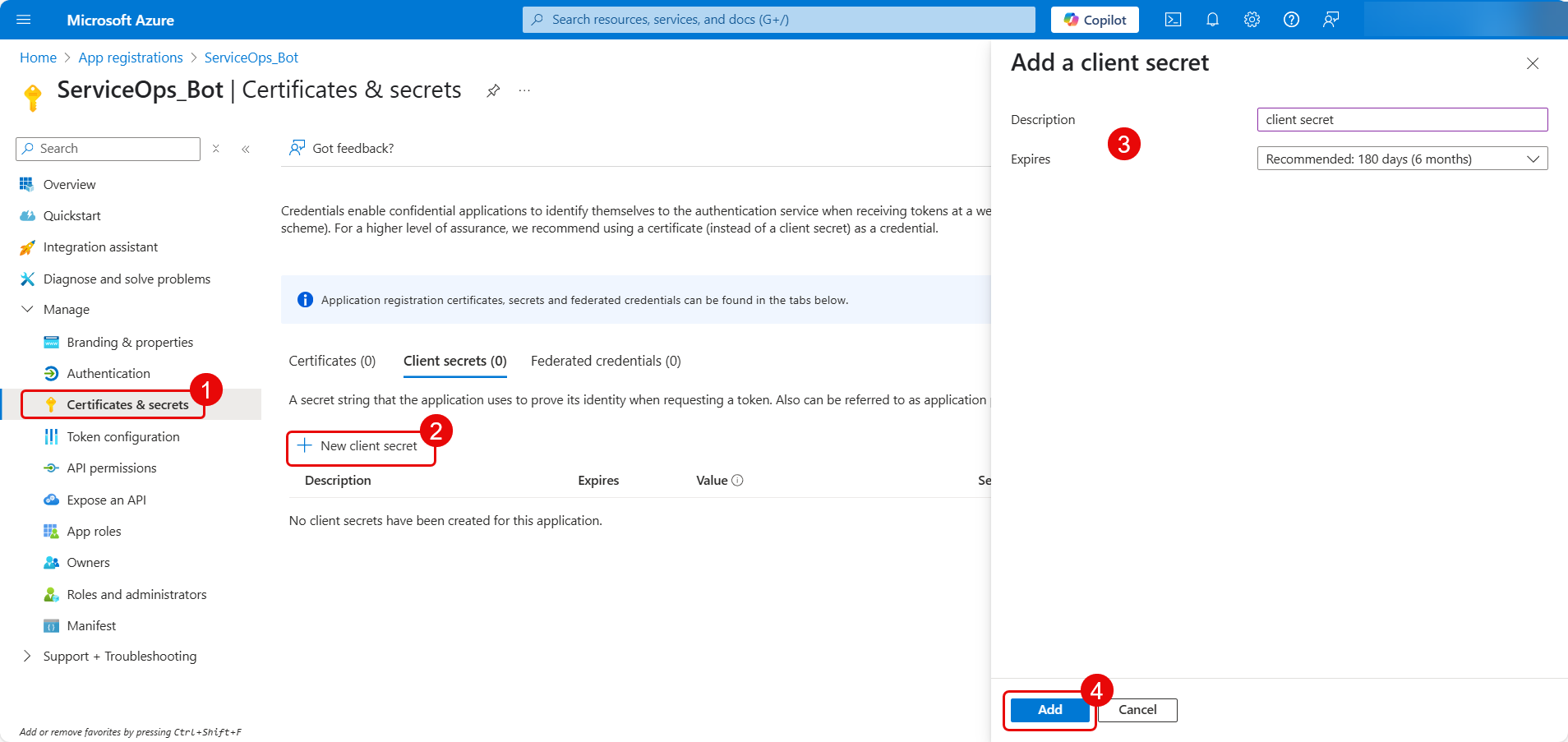
The client secret will appear. Copy the value and paste it as Password in the ServiceOps Teams Configuration page.

- Now, navigate to Apps, click the More Options icon (3 dots) and Download the app package. A zip file will get downloaded.

- Now, in the ServiceOps Portal, navigate to Admin > Support Channel > Virtual Agent > Teams App Config page.
Enable the Teams functionality to allow requesters to chat via the Teams application and configure the below settings.
- Allow Notification: Enable to send notifications to the Teams application. By default, it is disabled.
- Client Id: Copy the bot id (step 8) from Teams developer portal and paste it here.
- Password: Copy the client secret from Azure portal (Step 12) and paste it here.
- Attachments: Attach the app zip file downloaded from the Teams application in step 13. If you're unable to attach the file, ensure that the file extension is not blocked under Admin > System Preferences > Application Settings.
- Publish the App, In the Teams application, open the created application, navigate to Publish > App validation.
Click Get Started.
Click New Validation
Acknowledge the validation and click Start validation.
Once the app is validated it will appear as Completed.
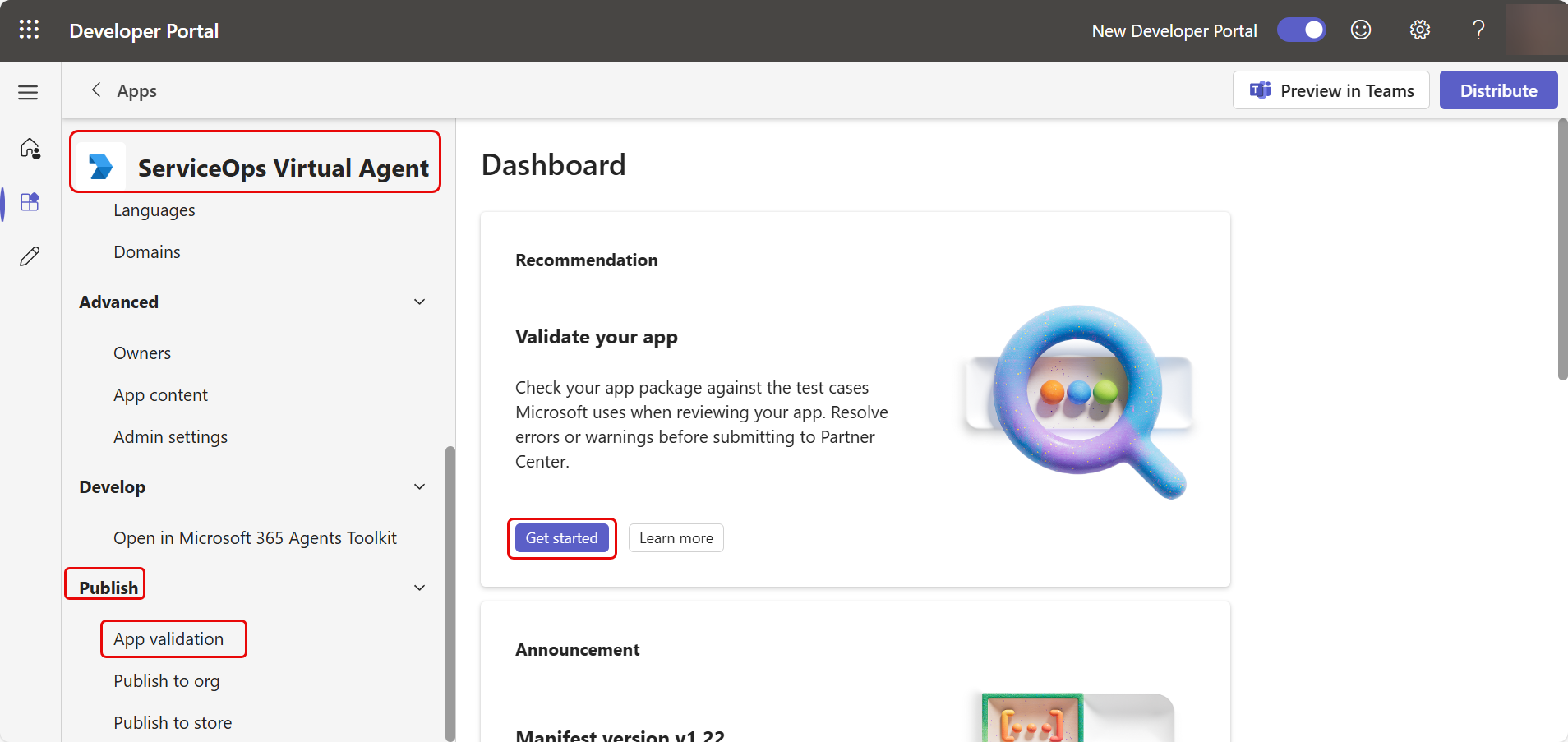

Next, to publish the created app, navigate to Publish to org tab and click Get Started.
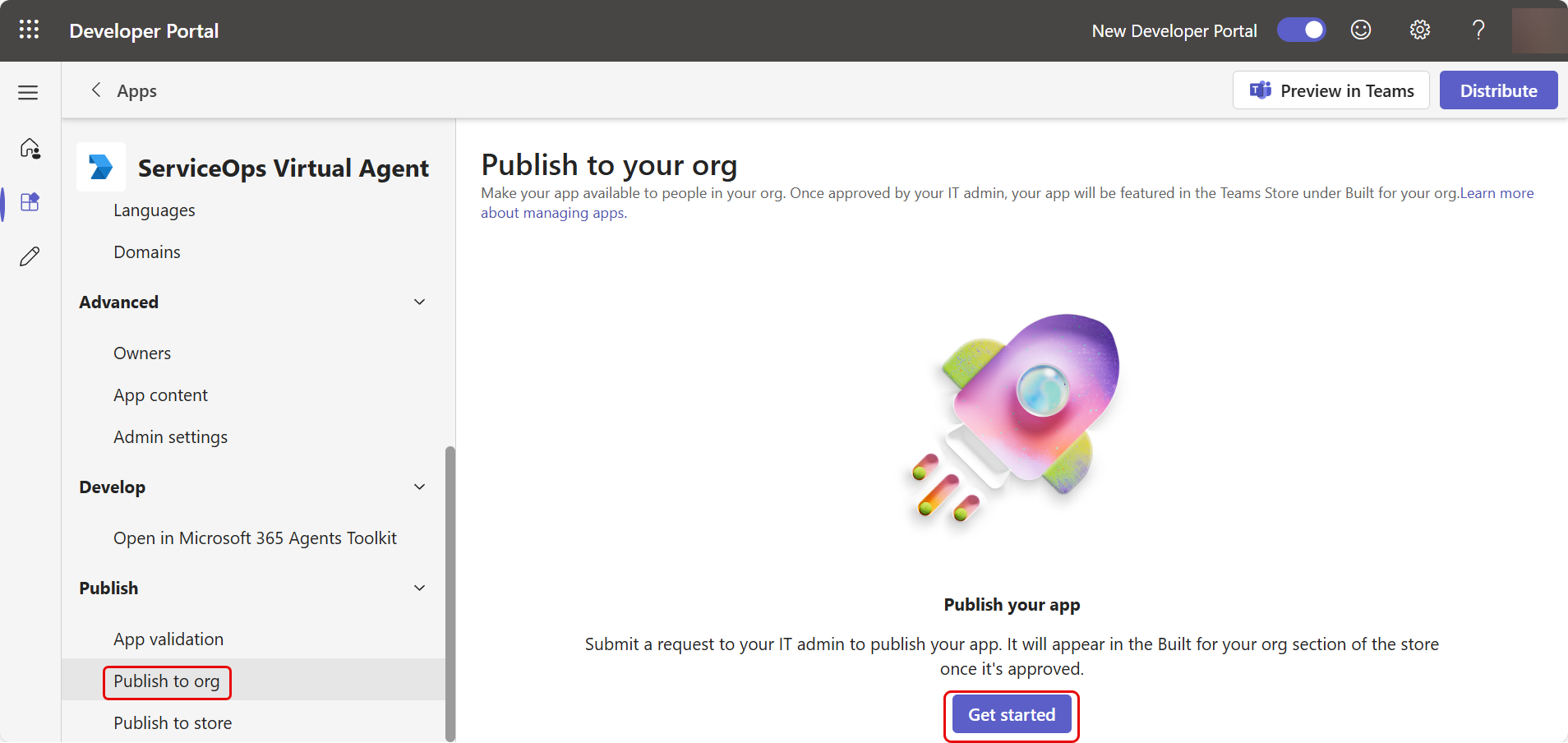
Once done, a request will be submitted to the IT Admin to publish the App. Once approved and published, it will appear in the apps list, as shown below. To approve the app, refer to the Upload a Custom App using Teams Admin Center link.

Select the App and click Add to add it to your chat list.
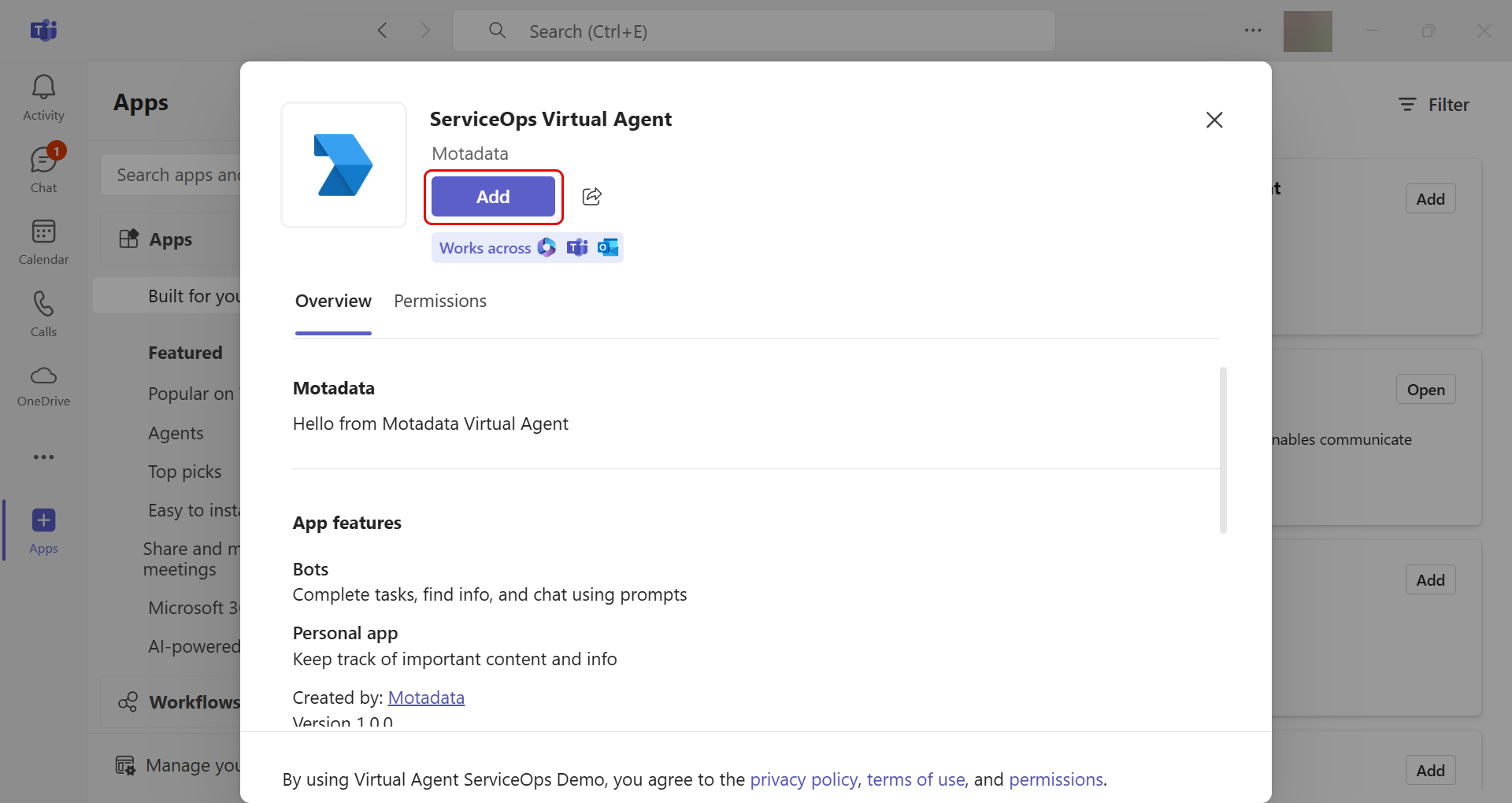

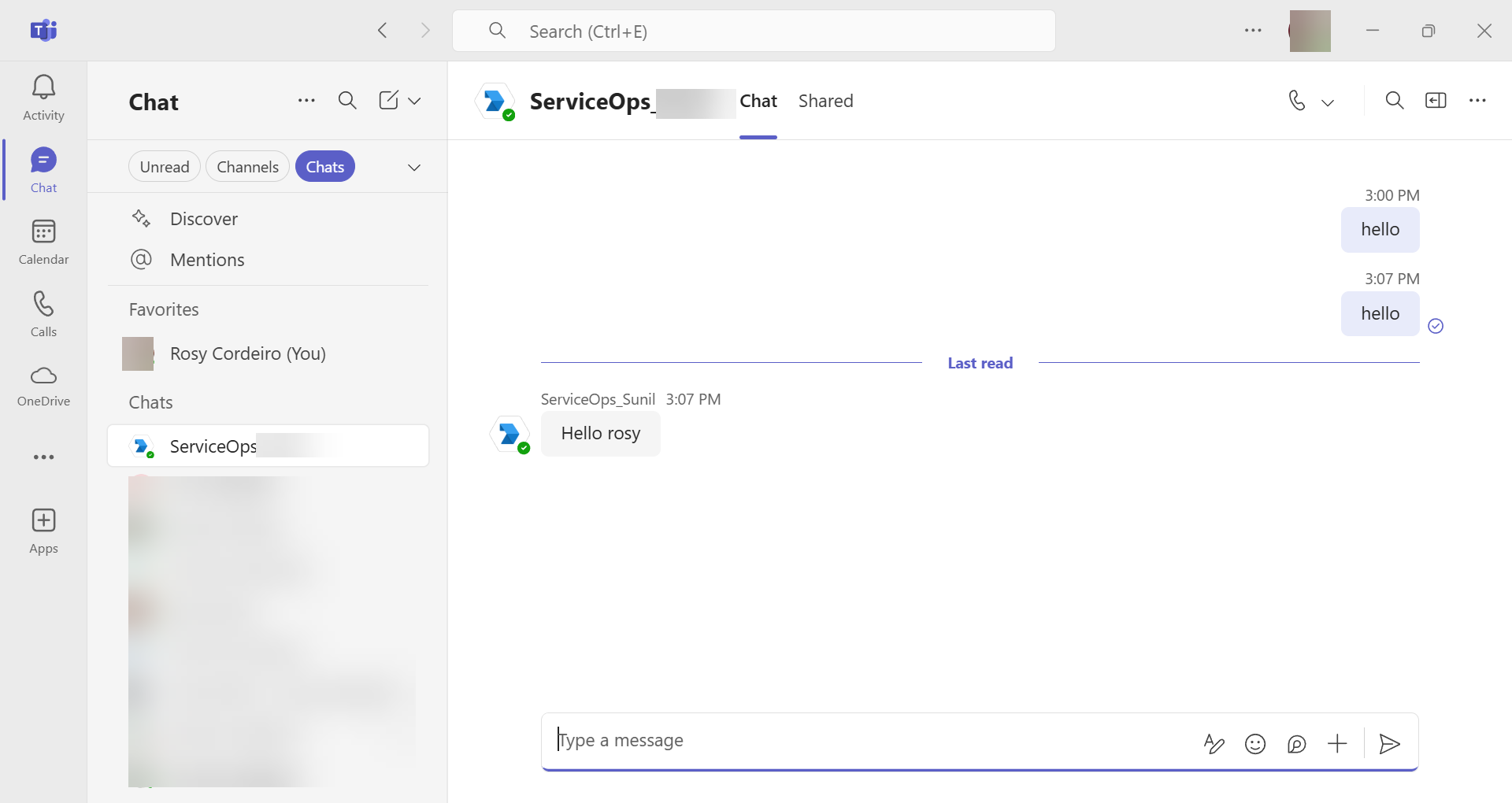
Once added, type hello, and begin your conversation with the ServiceOps Virtual Agent.